Showing posts with label religion. Show all posts

Tuesday, 17 May 2016

Review: The Terracotta Bride by Zen Cho

4.5 stars

The Terracotta Bride is a short story set in the Chinese Underworld. Siew Tsin was just a young woman when she got hit by a motor car and wound up in the tenth court of hell. There she finds a great uncle, who promptly sells her into marriage. Her husband Jungshen is a rich man, with pious descendents who burn money and goods so that he can live well in the Underworld. One day, Jungshen brings home another wife, a terracotta woman whom he names Yonghua, and she changes everything for Siew Tsin. 

This isn't a romance, though it does have some f/f romantic aspects. The writing is lyrical, Siew Tsin's characterisation was lovely and those two things make The Terracotta Bride poignant as hell (pun not intended). The worldbuilding is also amazing, and I would auto-buy any more stories Cho wrote in the same universe. It's a short story, so this is a short review, but, basically, I loved it.

Thursday, 3 March 2016

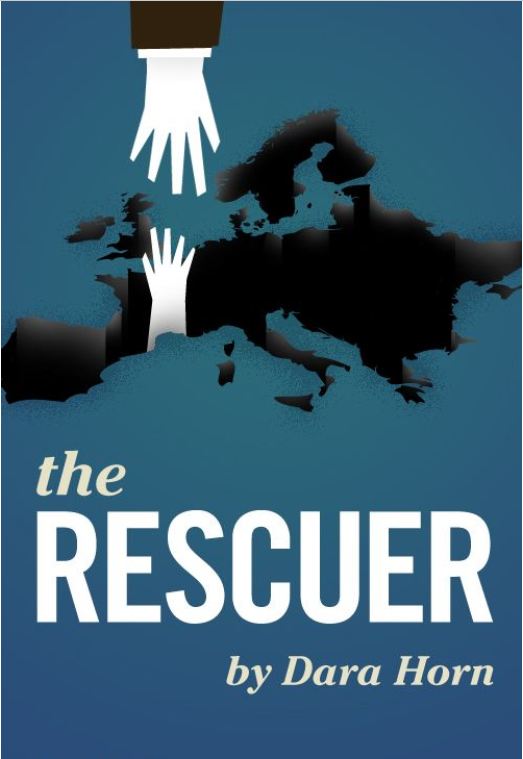
Non-Fiction Review: The Rescuer by Dara Horn

Recommended


Dora Horn's The Rescuer is a short non-fiction piece about the efforts of an American, Varian Fry, to save cultural and intellectual luminaries at risk from the Nazis, either because they were Jewish, dissidents, or both.

Churchill once said that "great and good are seldom the same man", and Horn illustrates his meaning almost perfectly. Varian Fry was a great man, and he worked within a system governed by great people, all the way up to Franklin and Eleanor Roosevelt. The people he saved were also great people: Marcel Duchamp, Hannah Arendt, Marc Chagall, Max Ernst, Andre Breton and Claude Levi-Strauss, to name only a few. But Horn highlights that - no matter how history has recorded these people and their deeds - the term good is sometimes ill-fitting.

Unlike the more familiar story of Oskar Schindler, who, throughout the 1960s, was propped up financially by donations from the people he had saved, those rescued by Fry did not wish to maintain contact with him after the war. Nor did many demonstrate any gratefulness for the immense risk he had undertaken; several even put his operations in danger with their vanity and self-absorption.

And, even though Fry was doing good work and ultimately saved over 2000 people, he was a troubled man, so much so that one of his children still refuses to discuss him. Another ascribes his erratic behaviour to bipolar disorder. As Horn also points out, there is also a certain irony in his position as a Righteous Gentile. He helped people to escape the Nazis' brutal eugenics programmes, but, in order to do so, subjected these people to another form of eugenics; only people making the most important contributions to the "culture of Europe" would be considered. 


As for the statesmen of the American government, they tried to have Fry recalled when his work was no longer in line with their politics (i.e. when they realised they were actually going to have to take in all these people Fry was saving!). When Fry refused to cease and desist, the State Department tipped off the Vichy regime about Fry and his team, leading to their arrests. 


Going in, I thought Fry's story would be presented in a self-congratulatory American-saves-the-world manner, but I couldn't have been more wrong. In fact, for Horn and other who have studied Fry, this is why is story has received so little attention, comparative to those like Oskar Schindler. It blurs the black-and-white binaries through which we see the Second World War. Whereas normally we have the good, heroic Americans (and other Allies) as the counterpoint to the evil Nazis, here the Americans do not come out smelling so fresh. Not only did they dob Fry in to the Nazis' puppet government in France, their actions make a mockery of our two core narratives when it comes to the Holocaust: that we didn't know a genocide was occurring, and, that, even if we had known, we would have been powerless to stop it. This second assumption rests on the fallacy that people would want to do anything, which then, as now, is not necessarily true. 

We like the story of the Righteous Gentile, but the truth is that most Gentiles were decidedly unrighteous, even when they had a level of awareness of what was happening to the Jews across Europe. And, make no mistake, Fry's experience demonstrates that the implementation of the Final Solution was an open secret.


In 1935, Fry witnessed a pogrom along the Kurfuerstendamm in Berlin, which, according to one of his co-rescuers, contributed to his decision to go to France years later. At the time though, Fry reported on the violence for The New York Times. In 1942, he wrote another piece, this time for The New Republic, in which he chronicled a 1935 meeting with Ernst Hanfstaengl, the Nazis' chief foreign press officer. Hanfstaengl told Fry, quite plainly, that he and the 'moderate' Nazis wanted to expel the Jews, while Hitler's 'radical' wing had their hearts set on mass murder. Neither was Fry was not the only person reporting these developments to the American newspapers. 

As for the American government, they agreed to Fry's presence in France, if only tacitly, because they knew that the alternative was losing these great brains to extermination camps. But, even so, they took almost few actions to offer refuge to other European Jews because both the government and the general population were scared of opening the door to 'floods' of Jewish refugees, as the case of the SS St. Louis shows. 

The great strength of Horn's writing lies in her ability to make the reader examine these things in a new light, and she does so by conveying her own conflicted feelings. In one instance, she writes: 
The inevitability of murder...is the premise of all narratives of Holocaust rescue - and part of what makes me so uncomfortable with them. The assumption in such stories is that the open maw of death for Europe's Jews and dissidents was something like a natural disaster. These stories, in some sense, force us - people removed from that time by generations - to ask the wrong questions, the kind of questions we might ask about a tsunami or an epidemic. Someone has to die, the thinking goes, and the only remaining dilemma is who will get the last seat on the lifeboat or the last vaccine. But these questions fall short by assuming that the perpetrators were irrelevant. As long as we are questioning the choices that are made, shouldn't we be considering the possibility of the Holocaust not happening at all? If someone was in the position to choose whether to save person A or person B, shouldn't whole societies have been in the position to reject the notion of genocide altogether? Why didn't everyone become Denmark? (Loc. 387-396)
I read The Rescuer in the first days of the new year, but Horn's rendering of Fry's story and the Holocaust in general have stuck with me these past months, invoked by things I come across in my everyday life. First of all, there are the people Fry saved, who have been popping up everywhere, even though Levi-Strauss was the only one I had any awareness of before starting this book.

But then, there is also something greater, something I sometimes wonder when I open the newspaper and read about Europe's current refugee crisis, Australia's despicable treatment of asylum seekers or Trump and the rise of the far right in the United States. If we tell ourselves these comforting fictions that we didn't know, that we were powerless, are we more likely to ignore the cries for help that are occurring now, or in the future? After all, as George Santayana said, "those who cannot remember the past are doomed to repeat it.".  

Thursday, 30 July 2015

Review: Wild Burn by Edie Harris (Plus Movie Recommendation)

4.5 stars

The set-up of Edie Harris' Western romance Wild Burn reads like someone dared Harris to come up with the most unfortunate first meeting between hero and heroine. Or maybe she found one of those weird creative writing prompts that pop up on Pintrest, accompanied by a stock image that should be on a motivational poster. Yes, I can see it now: a man (and his Stetson) are silhouetted against a mountainous ridge, and over the background of evening sky is white writing in an ill-chosen font:
Write a scenario in which the hero shoots the heroine when they first meet. Then make them fall in love. Oh, and make the heroine an ex-Catholic nun and the hero an ex-Confederate soldier who now kills Native Americans for a living. But you have to make the reader like him, right? 
It sounds fantastical at best, but Harris makes it work. The characterisation is wonderful; Moira, the heroine, left the sisterhood after a terrible event made her question her faith. She's still reeling, trying to find her place and make sense of the world, and put to rest thoughts of anger and revenge. It was nice to see the hero support her in this quest; too often heroes place their heroines on a pedestal, unable to easily acknowledge that a heroine's troubles are as important as the ones they themselves are facing.

The hero, Delany, was facing challenges trying to maintain moral distinctions and a sense of his humanity in amoral surroundings. The plot aided the development of both characters, while also providing an interesting look at the issues of post-Civil War America, including Catholic intolerance, the aftermath of the Civil War and the treatment of Native Americans.

The relationship between Delaney and Moira was tantalising and played out beautifully, but if I have one gripe, it's their absorbtion when things were getting hot and heavy. I get it, they're massively physically attracted to each other, but that doesn't mean that you should have your characters forgetting the presence of others and making out in the middle of the main street. For me, this really didn't gel; you'd think that an ex-solider would have better awareness of his surroundings, and an ex-nun and unmarried schoolteacher in a patriarchal society would desire a higher level of circumspection.

Still, Wild Burn made me think that maybe I should give Western romances another try. They're one of the few sub-genres I've never really enjoyed, as I can never get over my disquiet at the American exceptionalism and race relations they contain. I only bought Wild Burn because it had such good reviews, and because I was craving some frontier vibes after watching a German-language Western recently at Sydney's Audi German Film Festival.

The Dark Valley (Das Finstere Tal) is set in a remote valley in the high reaches of Austria, but don't be turned off by the fact it's not actually set in the Wild West. It's got that classic Eastwood main character: the rough-around-the-edges good guy outsider, seeking revenge for those that done him wrong. It's suspenseful, with a excellent surprise twist during the final showdown that you don't expect, despite all the clues. The acting is wonderful, and so is the camerawork. I went because I had free tickets, with the expectation I wouldn't like it very much, but I loved it. I've popped a trailer with English subtitles below so you can get a feel for it. If you want to watch it, it's on American Netflix. Australians, you lose out (again).


Monday, 15 June 2015

Review: She Wore Red Trainers by Na'ima B. Robert

4.5 stars

She Wore Red Trainers: A Muslim Love Story is the story of Amirah and Ali, two eighteen-year olds trying to navigate their family, faith and future as they come of age in the gritty suburbs of South London, and I really enjoyed it. 

As a YA romance between two observant Muslim teens, there was relatively little interaction between Ali and Amirah, which I had seen other readers complaining about on Goodreads. For me, this was precisely what made it interesting and unique: they embodied a different set of norms, values and beliefs when it comes to interactions between genders. And it's not as though their lack of direct contact came at the expense of a relationship all together.  Just like most prospective couples in conservative cultures, they communicated through their friends and family members, and in small but meaningful gestures.

Amirah and Ali and their family members were wonderfully written, and the dynamics of their respective families formed a large part of the story. The imperfections of Ali's father and Amirah's mother as people and parents were expertly reflected in their children's wants, fears and motivations. For Amirah, her mother's four Islamic marriages and wholehearted reliance her husbands has made her gun-shy about relationships, and she vows never to marry. With overwhelming family responsibilities, she takes solace in art, even though she is resolved to do a more 'sensible' course at university. Meanwhile, Ali's father has lost his business and the family's house in Hertfordshire in the wake of his wife's death, and Ali and his brothers are struggling to come to terms with their new, much reduced, circumstances.

The dialogue throughout really reinforced the dual world the characters inhabit. The Muslim 'brothers' Ali hangs out with - including Amirah's brother Zayd - speak as though they just stepped out of an episode of Skins, but with Arabic phrases peppered throughout.  Amirah and her friends are the same, speaking like any other gaggle of British girls, except with the addition of a 'Mottie' (Muslim Hottie) scale that they use to rate boys.  Other reviewers disliked the author's use of jargon - both British and Islamic - but once I got used to it, I quite enjoyed it. To me, it reinforced the point that these characters were British teenagers with similar problems to any other British teenagers, only with the added dimension of their Islamic faith. In some instances, they had no problems reconciling the two, but in others, they struggled to establish what was halal and haraam in a world so different to that of the Quran and Hadith.  There was a glossary of Islamic/Arabic terms provided at the back, which I didn't find until I'd finished, but most things were decipherable by context anyway, and I realised I had learnt a lot a few days later, when I read an witty article about Islamic pick-up lines and understood some of the nuances.

In a lot of ways, She Wore Red Trainers contained the best of both YA and adult romance. Ali and Amirah's interactions were cute yet profound, leaving the reader wanting more, just as the characters themselves did.  One of the reasons I stopped reading YA is that I often had trouble believing that the relationships would last for long after the final page. However, in this novel, Ali and Amirah are entering into a relationship having already made a lifetime commitment, and this gave me the Happily Ever After that I'd normally find in adult romances. 

Related Posts Plugin for WordPress, Blogger...