Showing posts with label M/M. Show all posts

Saturday, 27 January 2018

Best Reads of 2017: Part 1

It's almost the end of January, and - after a long, stressful end to the year on the academic front - I've finally got my ass into gear to publish my Best Reads. In 2016, I set this post up as my 5 best reviewed reads, 5 best un-reviewed reads and 5 best not published in 2016. Given the marked lack of reviewing in 2017 comparative with 2016, I was unable to do the same this time around. Instead, I've just chosen my best 15 books of the year.

As always, narrowing a year's reading to a handful of books is extremely difficult. I chose the featured books not just because they were outstanding, extremely enjoyable books, but also because they stuck in my mind for some reason. This may be originality or uniqueness of concept, outstanding execution and exquisite worldbuilding and/or characterisation. It is almost always a combination of all of the above, sometimes also accompanied by a sense that a book I loved hadn't been given its due when it came out, or in the end of year Round-Ups. 

So, without further ado, I present you with my 15 Best Reads of 2017. (This post was initially just the first half, but then I never got around to doing my second post, so I edited this one and collated them into one...in August).

1. The Future Chosen by Mina V. Esguerra
(m/f NA romance in fictionalised setting)


Technically, I'm cheating on this one: it was published in the last few days of 2016, but I couldn't bear to leave it off. It's the romance between two young political hopefuls in a fictional country where only one person from each 'family' is allowed to enter the public service, meaning that - in order to have a relationship - one of them would have to bow out of political life. When I reviewed it back in February, I called it "suspenseful and sweet and clever and just so good". To that, I would add, 'extremely feminist' and 'a nuanced portrayal of oligarchy and elitism'. 


2. Peter Darling by Austin Chant 
(m/m fantasy romance with trans MC)


This queer Peter Pan retelling was everything I never knew I needed. When he can no longer bear his life as Wendy Darling in the real world, Peter Pan flees back to his childhood refuge of Neverland, only to find that Captain Hook now inspires an entirely different set of feelings. The initially immature Peter and ennui-stricken Hook offset each other perfectly in a unique rendering of the enemies-to-lovers trope. Chant's Neverland is reminiscent of old Grimm fairytales, both in the trials and suffering the characters must face, and in the sense of hope and possibility offered by a world unfettered by mundane laws and boundaries. 


3. Pretty Face by Lucy Parker 
(m/f contemporary romance)


Parker's second foray into the London theatre world was just as thrilling and fulfilling as her first, the much-lauded Act Like It. I'm a sucker for characters snarking at one another to hide their attraction, and Pretty Face has that in spades, along with a heroine fighting against being pigeon-holed as a sexpot, a grumpy theatre director and an age-gap trope. 


4. Tempting Hymn by Jennifer Hallock 
(m/f historical romance)


The poignant and sweet romance between a missionary workman and a fallen Filipina nurse during American colonial rule in the Philippines, Tempting Hymn was another early-year review before I got dragged down into a vortex by university work. The heroine's story - that of being seduced, bearing an illegitimate child and trying to build a better life for herself and her child after being ostracised - is one of eternal relevance, as is Hallock's exploration of the differences between preaching the tenets of a faith, and living them. 


5. An Extraordinary Union by Alyssa Cole 
(m/f historical romance)


I'm not alone in thinking that this was one of the most outstanding contributions of 2017. The story of Elle, a freedwoman who goes undercover as a slave in the South to spy for the Union during the Civil War, has garnered a lot of praise both inside and outside Romancelandia. That's how it should be, because it's an exquisitely crafted story with so much to say about relationships, race, gender, history and society. 


6. Beauty Like The Night by Joanna Bourne 
(m/f historical romance)
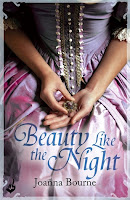

With her lyrical writing style, strong sense of historical place and continually strong central romances, it's hard to imagine Bourne releasing a book that isn't an instant favourite. In my opinion, the Spymasters series is unparalleled in its depictions of self-sufficient, strong heroines and the men who respect them, and - after following Sevie since her infancy - it was wonderful to see this youngest member of the Meeks Street family come into her own and meet her match. 


7. Small Change by Roan Parrish 
(m/f contemporary romance with bi MC)


In the last few months, Romancelandia has started talking about the "Cinnamon Roll hero", a term that calls up the caring and soft hero without implying he is anything less for his lack of alpha-ness. The hero of Small Change, Christopher, is - in my opinion - a total CinRo hero. He owns a sandwich shop, through which he meets Ginger, a prickly bisexual Jewish tattoo artist. Ginger and Christopher's two-steps-forward, one-step-back dynamic - in which Christopher shoulders most of the emotional labour as he attempts to sort through Ginger's relationship hang-ups - was unlike any other portrayal I'd ever read. I umm-ed and ahh-ed about including it because its nothing flashy, but in some ways it deserves its place here even more so for just being a quiet, emotional romance that so beautifully undercuts our cultural narratives about unlovable women and emotionally aloof men. 


8. The Truth of Things by Tasha L. Harrison

(m/f contemporary romance)


If I had to sum up The Truth of Things in one word, it would be 'powerful'. The central romance is between a cop struggling with the racism of his department and a photographer who finds herself the target of that racist brutality. To be honest, I can't really find too many more adjectives to describe it, because it was so many things at once. Just go read it. 


9. A Taste of Honey by Rose Lerner
(m/f historical romance)


Lerner's Lively St. Lemenston series is continually outstanding, and this novella in particular was a breath of fresh air. About a hesitant baker hero and his assertive and ambitious assistant, it's dirty, sweet and showcases the historical realities of the British working and artisan classes. 
(m/non-binary historical romance)


Like Lerner, Charles is an auto-buy author for me, and this conclusion to her 'Sins of the Cities' series didn't disappoint. As always, both the mystery plot and the romance are beautifully crafted, and anyone who says that a non-binary main character is too 'modern' or 'ideological' can bog right off. Pen was gorgeous, and Mark so bloody sweet.


(m/f, m/m & f/f historical romances)

Not being American or particularly into musicals (with the exceptions of a few classics that I grew up with), the whole Hamilton thing has mostly passed me by. But that didn't mean that I couldn't enjoy these novellas set around Hamilton and the Revolutionary War. They were all gems, but my favourite was undoubtedly Rose Lerner's story of a cross-dressing female soldier who accidently comes into her husband, who believes her dead.

(m/f historical romance)

Throughout this series, set around a fictionalised version of the Space Race, readers have seen the dire state of astronaut Mitch Dunsford and his wife Maggie's marriage. This poignant novella is their second chance romance, and watching them try to untangle their misunderstandings and communication break-downs and work out where to go from here is both heart-breaking and heartening, if that makes any sense. 


(m/f contemporary romance)


Wrong To Need You was another popular favourite this year, and it's not hard to see why. Angsty forbiddden romance, long-time love...this hit all my buttons. 


14. Dance with Me by Alexis Daria
(m/f contemporary romance)


Alexis Daria's 2017 debut Take the Lead and the follow-up, Dance With Me, were strong contenders for the Best of list. In the end, I went with Dance With Me because I am a total sucker for Russian-speaking heroes and prickly heroines, not to mention women who are going to do this damn thing all by themselves, thank you very much. 


(m/f/m erotica)

The Boys Next Door is probably my favourite erotica of all time. Eminently relatable characters, a solid plot, plus an off-the-scales heat rating. 

Monday, 25 September 2017

Review: Yuletide Truce by Sandra Schwab

3 stars
I received an ARC of this book from the A Novel Take PR (on behalf of the author) in exchange for an honest review. My opinion is my own.


Yuletide Truce was a short and sweet m/m Christmas novella. As always, Schwab builds an excellent sense of time and place, but I wish that the romance had been a little bit more drawn out.

Bookseller Alan "Aigee" Garmond loves the Christmas season, but Christopher Foreman's scathing comments in About Town magazine about Aigee's humble book reviews are putting a damper on his mood. Foreman's antipathy upsets Aigee, but, when an incident occurs that strips both men of their defences, it provides an opportunity for the two men to call a Christmas truce, one that has the possibility to turn into something more.

Schwab is extremely talented at breathing life into the everyday world of her characters. Here, that's the Victorian middle-classes, and there were lots of small moments that brought me unexpected enjoyment: Aigee's reminiscences of his life as an apprentice, the descriptions of illustrations from an English translation of the Brothers Grimm, and a reference to the knocker-upper. 

An awareness of class underlies the whole novella, as Aigee doesn't feel completely at home in either the bourgeoisie literary world in which he works, or the world of the rookery where he grew up. 

While this sense of being caught between two worlds was poignant, I felt as though it was undermined by the lack of conflict in the men's developing romance. Despite the enemies-to-lovers trope, after the men's initial on-page meeting, there was very little tension between the characters, or resistance to a relationship. It all came a bit too easy, with almost no groveling on Foreman's part, or grudge-holding on Aigee's. 

That said, the lack of angst means that it fills a certain niche within the genre: everyone needs an easy, feel-good romance at times - particularly at Christmas, when many people are dealing with conflict-heavy or fraught family situations - and Yuletide Truce fills that need perfectly. 

Wednesday, 26 April 2017

Review: Peter Darling by Austin Chant

4.5 stars


Peter Darling is a beautiful queer fairy tale that is both whimsical and poignantly real. It revolves around Peter Pan returning to Neverland as an adult, taking refuge from the real world where he is forced to live in the body of a young woman named Wendy Darling. Things have changed in Neverland and Captain Hook and the Lost Boys are no longer at war, but Peter resumes his old feud with Hook all the same, only to discover that his old nemesis now evokes a whole other set of feelings.

At the beginning of the book, we see Peter much as one would imagine: he's the boy that never grew up, playing his war games without thought for the cost of his vendetta. As much as I came to love Peter - and the book - I struggled a little bit with this initial third of the story because of the senseless and casual violence Peter inflicts. However, I think this has more to do with me and my sensitivity to violence than the book itself. Hook also reveals to Peter - and thus the reader - something about the nature of Neverland that made the violence much easier for me to bear, allowing me to get lost in the story in a way that I had previously been prevented from doing. Similarly, regardless of how I reacted to it personally, this initial immaturity is essential to Peter's character, and his progression to realising the consequences of his actions - while still maintaining his boyish enthusiasm - was masterful.

The energetic and impulsive Peter is balanced perfectly by Hook's ennui-stricken and world-weary facade, and the relationship between the two was everything you ever wanted from the enemies-to-lovers trope. Both characters are morally ambiguous, and the Neverland here is not the sanitised version of the Disney film, but - as I mentioned earlier - one with real dangers, real violence, and slightly sinister undertones like those in old fairy tales.

Nevertheless, Chant's Neverland is the best kind of fantasy world, the kind that frees us from the oppressive realities of our world, instead of replicating them. There, Peter isn't faced with gender dysphoria, or disapproval, judgement and condescension from his family. Neither must James remember the sorrows of his life in the 'real world' of post-WWI Britain.

This has been a short review - by my standards - but it's very hard to capture the magic of Peter Darling in words. It's rekindled my childhood love of the story, when I would open the copy of the book my great-uncle had given me just to look at the pictures, or when I watched my VHS copy of the animated movie so many times that it eventually unspooled in the video player, breaking them both. But it's added another deeper dimension to the story, and, as far as I'm concerned, Disney and J. M. Barrie can both go home, because Peter Darling is now canon Peter Pan. 

Wednesday, 25 January 2017

Review: Coffee Boy by Austin Chant

4 stars

For all its short length, Coffee Boy is an novella jam-packed with both romance and deep, emotive exploration of things that affect the characters.

The narrator, Kieran, is a young trans man who takes an internship in a politician's office (and Coffee Boy is ownvoices story when it comes to trans representation). The office's campaign strategist, Seth, is prickly and reserved, but his crush on their straight boss Marcus is plain as day to Kieran. With Marcus oblivious to both Seth's crush and the fact that he hasn't exactly provided Kieran with the trans-friendly workplace he promised, Seth and Kieran gradually form a workplace rapport that - on Kieran's part - slowly morphs into a crush of his own. 

I really liked the tentative way a relationship developed between Kieran and Seth. After Kieran gets only his initial dislike of the standoffish Seth, there's a one-step-forward-two-steps-back dynamic. Kieran pushes Seth's boundaries and Seth tries to find a balance between ensuring that Kieran is treated appropriately, and constantly centring Kieran's trans-ness in a way that reminds Kieran of his visibility and difference. 

The two of them are also feeling out each other in terms of being the only two non-cishet people in the workplace, and much of their early interaction includes this: by openly acknowledging Seth's crush on Marcus, Kieran has inadvertently caused Seth to come out to him as bisexual. Their different experiences and age gap mean that Kieran self-identifies as queer; but Seth still associates it with the slur. Kieran is also very aware that he is the one who is visibly non-cishet, who lives with the emotional toll of being constantly misgendered, of people wanting to be patted on the back for accepting him, and of having to pass as female at his job flipping burgers.

Some Goodreads reviewers have made mentions about the 'balance' between the romance and the discussions of gender identity and sexuality, either saying that they found it to be well-balanced or not. Personally, I'm not sure that you can talk about a balance, as though the two things can be separated out and weighed individually on opposite ends of a scale. The fact that Kieran is a trans man attracted to other men and Seth is a bisexual man impacts on who they are, the way they live their lives and interact with each other and the people around them. There is no way to gauge the romance except within that context. 

When Kieran and Seth fall into a relationship at the end, I loved the way that their tentativeness dropped away. They are open with each other; Kieran states that he wants to try dating Seth, and Seth makes it clear that their relationship will not affect Kieran's employment opportunities. The sex occurs organically, without any sense that there is something to be negotiated or figured out. 

Coffee Boy didn't go much past Kieran and Seth establishing their relationship. Objectively, I feel like that makes sense, since the book was really centred around them sounding each other out, both as queer colleagues and in a romantic sense. But that doesn't mean that, subjectively, I wouldn't have liked to see them further down the track, or have the novella be longer. But that's pretty standard for me and novellas, for all that I try not to judge them as though they were novels. 

As a novella, Coffee Boy had exceptional depth. I've talked about the relationship dynamic and the exploration of gender and sexuality, particularly in the workplace, but the other stand-out aspect for me was Kieran's dry, dark sense of humour, which is used to show his expectations about how people will treat him: 
Seth actually turns and scribbles something down on a pad of paper in front of him. Kieran can’t imagine what he’s writing. “Remind everyone in the office that new intern is a dude”? Or, probably more likely, “Fire whiny trans guy at earliest opportunity.” (8%)
Later in the story, Kieran also deploys his humour to keep Seth from taking himself too seriously, in a way that demonstrates how well-matched the two are. 

Overall, I really loved Coffee Boy, and the only thing that stopped me from giving it 4.5 stars is the fact that it's written in third-person present tense, which gives me a lot of trouble, as I wrote in the last review for a book I read in this style. This is obviously an intensely personal thing, so if it's not something that bothers you, mentally bump the rating up that half star. 

Monday, 19 December 2016

Review: The Centurion's Choice by Sandra Schwab

4.5 stars

I can't remember where I stumbled across The Centurion's Choice, but since it only came out at the beginning of this month, I guess it must have been on a new release list somewhere. Anyway, I'm grateful I saw it, and decided to take a chance on it, because it was delightful. It has great characters, with a tender romance between the heroes, and the setting is amazingly rich in historical detail.

Although Lucius Satrius had hopes of being promoted to centurion, when Caius Florius Corvus is brought in instead, Lucius swears his loyalty to him as the unit's optio. But Florius - or 'Cranky Centurion Florius' as the centuria call him - is wary of his second-in-command. But, as their campaign in Germania drags on, they find themselves growing closer, and questioning whether their different ranks really mean they can't be together. 

It occurred to me after I bought The Centurion's Choice but before I read it that it might be annoyed if it anachronistically adhered to modern ideas of heterosexuality and homosexuality over Roman constructs of penetrator/active partner vs. person being penetrated/passive partner. But I shouldn't have worried. Not only has Schwab done her research, the question of Roman sexual norms and prejudices make up much of the romantic conflict between the heroes:
Romans didn’t fuck other freeborn men, though a man from one of the provinces and without Roman citizenship might be just about acceptable—as long as he let the Roman do the fucking, of course. But alas, Centurion Florius was Lucius’ superior officer, and if Lucius had gotten the man’s true measure, he’d say Florius would never do anything that might be construed as taking advantage of, and dishonoring, a man serving under him. (32%)
Most of the book is from Lucius' perspective, which worked well, because it saved Florius' point of view for pivotal moments that contained powerful emotion. For the most part, I thought the men's transition from wary colleagues to friends to lovers was excellent. I would have liked to have seen one or two more interactions with them as friendly colleagues or affectionate lovers, just to have a bit more of a basis to imagine the rest of their life together, but it is a novella, and Lucius' and Florius' romance was very well developed and satisfying even without these extra moments. 

Lucius' and Florius' lives in the giant Roman military machine is very interesting, and this really shapes the story, as well as providing a strong sense of place and time. However, even more than the military stuff, I loved the way that Schwab conveyed the breadth and diversity of the Roman Empire. Lucius and Florius serve in an auxiliary unit mostly made up of Gauls, while Florius - although a Roman citizen - has been raised in Caledonia (aka Scotland) and Lucius is from province of Syria (although his hometown is now located in modern-day Turkey). 

At the beginning of the book, Schwab provides a brief Author's Note to orientate the modern reader to the present-day names of the places mentioned in the book (for example, Vindobona is Vienna; Danuvius is the Danube). There is also another, more extensive, Author's Note at the end that provides more information about the military aspects, as well as Roman male-male sexual and romantic relationships. It's all fascinating, and the provides just the right amount of context to the novella itself.  

The Centurion's Choice was such an excellent read - especially for a novella - and I'm excited to see what Schwab has done with the full length novels in the series, Eagle's Honor: Banished and Eagle's Honor: Ravished.

Sunday, 26 June 2016

Review/Reflection: Skybound by Aleksandr Voinov


Skybound by Aleksandr Voinov had its merits. It's a very short novella (only 44 pages), so the plot was a bit rushed, but the characterisation was solid and the relationship arc was reasonable. It's very lyrically written. However, I also have some reservations about Skybound, if my thoughts are concrete enough to be called that. Maybe a better way of phrasing it is that there are some things that sit uneasily together for me, and which people definitely need to consider when thinking if this book is right for them. 

This is largely because it's set in the last days of World War Two, and is the romance of a German Luftwaffe pilot, Baldur Vogt, and Felix, a mechanic who works on the planes. Felix has admired and loved the flying ace from afar, but after he pulls Vogt from the flaming wreck of his plane, the two develop a friendship with undercurrents of something more. Vogt and Felix escape the airfield for a weekend, only to return to to the realities of the Russian advance on Berlin. 

As much as the central romance itself was well constructed, I think I would have felt a lot easier about the characters and their setting if they had shown more emotional angst. There was some, but it was brief and low-key and I didn't feel it was in proportion with the fact that Felix and Baldur are two gay men (and, later, a gay couple) in Nazi Germany. While they had some concerns about being outed, these were less in, say, The Imitation Game, set in Britain during the same period. Even if the mechanisms of the state had broken down at this point and people were no longer being prosecuted for homosexuality, I feel like 10+ years of living in a toxic, openly homophobic environment would have had an effect on the characters, both in terms of paranoia about being outed and their own acceptance of their sexuality. There is brief mention of the latter with regards to Felix, but by and large, I didn't see this, and I feel a bit uncomfortable about that, like it's an erasure of the Nazi regime's genocidal homophobia. 

The lack of more than low-level fear or angst extends to more aspects of the book as well, particularly the Russians closing in. While this drives the plot in the final scenes of the book, it is very underdeveloped until then, appearing like a bolt out the blue. 

I respect that it's a novella, so it can't include masses of content or suspense-building, but I felt both these areas were pretty essential if you are going to have an M/M romance set in Nazi Germany that uses fear of the Red Army's brutality to move your plot along. 

Voinov puts a lot of effort into painting a picture of the airfield, with details of the Luftwaffe and planes, but there is none of the same effort put into recreating other parts of the society. On some level, I think this was a conscious decision, part of efforts to portray Felix, Baldur and their ilk as citizens and soldiers of Germany and distinguish them from the Nazi establishment. But part of what did make me uncomfortable with the story is that the airfield is presented as a bubble, with little external input or output, even from other military establishments. But focusing on the technical aspects of the planes and not mentioning where Baldur's orders were coming from doesn't change the realities of the situation. 

And this is where my mind gets stuck, because an idealistic part of me wants to believe multiple experiences of the war can exist side-by-side without impinging on each other, but another part also recognises that in order to focus on a story like Felix and Baldur's, a thousand others are pushed out of the frame. Reading Elie Wiesel's Night after I read Skybound, but before I wrote this review, I was reminded that, at the same time that Baldur and Felix took that weekend away with ample food and warmth and petrol, the survivors of concentration camps were being forced to make death marches through snow-covered Poland and Germany ahead of the liberating forces. 

These are all just jumbled thoughts, and I'm not the person to give them any weight or validity, if they're to have any at all. But I do think that maybe 44 pages are insufficient to tackle all the context that needs to be addressed in a romance with a Third Reich setting. I think that would be the case with a heterosexual romance, but it's doubly so with a gay romance.

In the end, I haven't rated Skybound, because I don't feel like my thoughts are enough of a cohesive critique to rate it negatively, but I would also feel uncomfortable giving it a rating that was divorced from them. 

Thursday, 16 June 2016

Review: Jasper and the Dead by R J Astruc

4 stars

Several months ago, as I walked along the Sydney foreshore that bears his name, I wondered why more people haven't written books about Billy Blue, since he was such a legend of the early colony. At the time, I thought Blue's daughters would be wonderful romance inspiration, since they married into the creme-de-la-creme of English settler society despite (or because of) the fact that their father was an eccentric, Black businessman who was an ex-convict and probably also an ex-slave. Little did I know that Astruc had already written a romance featuring Billy Blue and his family, one beyond my wildest imaginings. 

Jasper and the Dead takes place in an alternative colonial Sydney, where one of the convict ships arrived with a cargo of infected zombies. In the three years since, there's been a constant battle to control the hordes and keep Sydney safe. The town's been quarantined, and although Governor Macquarie sent word to England, no help has arrived, until one day an emissary sails through the heads. Macquarie calls on Billy Blue, both in his capacity as ferrymaster and as a friend, to get him safely through town and out to the ship, and Billy entrusts the job to his secretary, Pape Sassoon, and son, Jasper Blue, a seasoned zombie hunter. It's intially a mystery to Jasper why his father insists the bookish Pape needs to be involved, until he realises that this is another one of his father's elaborate matchmaking schemes, only this time his father has actually got the gender of Jasper's potential partner right. 

It's an unique set-up, made amazing by the all the world-building Astruc manages to cram into a novella-length piece. As a native Sydneysider, I enjoyed being able to relate to a city that is portrayed in such an interesting and dynamic way. In the final pages of the book, Astruc hits on something that I think is somewhat an eternal feeling in this changeable city of ours: 
It is a strange thing, but it occurs to Pape that Sydney has grown into its cityhood as he has grown into adulthood. He has watched the city spread its crude convict roots into the hub of life it is today. Pape has never fought for anything in his life, but he wonders now if he could fight for Sydney. 
Australians who know their history will also be delighted by the colonial personalities - both real and semi-fictionalised - that are interwoven throughout the story. However, these elements are not essential to understanding the story, and I think someone not from Sydney or Australia would still find Jasper and the Dead engaging, just in a different way.  

As you can also see from the above excerpt, the story is written in present tense. It's a testament to Jasper and the Dead that I made it through at all, because usually I end up going completely batty and DNF'ing about 20% of the way through present-tense books. Its use did pull me out of the story, and make it seem as though the characters' thoughts are being relayed simplistically and didactically. Despite this, I found the relationship between Jasper and Pape to be fulfiling, if low-key, and I loved that everything ended on such a sweet note. 

Jasper and the Dead originally appeared in the Under the Southern Cross anthology, but today there's the annoying choice between buying an individual online copy of each novella or buying a physical copy of the whole anthology. Nonetheless, after Jasper and the Dead I'm excited for the other novellas. 

Monday, 2 November 2015

Review: Him by Elle Kennedy and Sarina Bowen

3.5 stars


This review of Him by Elle Kennedy and Sarina Bowen is going to be short and sweet. I recently read Sarina Bowen's Understatement of the Year, which is also a M/M hockey romance, and in a lot of ways Him is very similar. It makes sense; they share (half) an author and in both novels the heroes are college hockey players who were childhood friends before their diverging paths pulled them apart. I enjoyed Understatement of the Year more, but I can't put my finger on why because I read it too long ago.

Anyway, Him is about Jamie Canning and Ryan Wesley, who spent their summers together at hockey camp as children. They were inseparable, until they were eighteen and Ryan pushed things too far, or so he thinks. But when they come face-to-face years later, playing college hockey for opposing teams, it's clear that Jamie not only doesn't hate Ryan, he's not even sure why his best childhood friend ditched him all those years ago.

Ryan and Jamie's yearning for each other - both as friends and lovers - was well done. However, there was less tenderness between them than the heroes of Understatement of the Year, and this somehow felt like a bit of a missing link between their friendship and romantic relationship. I also enjoyed the second half much more than the first. There's a sense that time is running out, and both Ryan and Jamie are telling themselves that it was never anything serious anyway. 

Both heroes were also both caught up in their own thoughts and interpretations. Since Ryan is out, while Jamie has always considered himself straight, Ryan's internal monologue was very much along the lines of "OMG, I'm taking advantage of him", while Jamie is grappling with the realisation that he is bisexual. Mostly, it worked, but, at times, it came across a bit stream of consciousness-y (I admittedly have a very low tolerance for stream of consciousness, thanks to studying James Joyce in high school). But overall, a solid friends-to-lovers novel.
Related Posts Plugin for WordPress, Blogger...