Showing posts with label discrimination. Show all posts

Thursday, 3 March 2016

Non-Fiction Review: The Rescuer by Dara Horn

Recommended


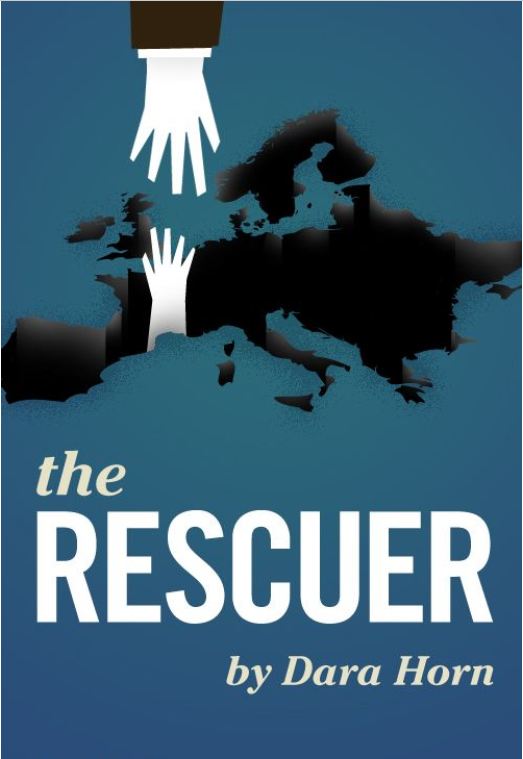
Dora Horn's The Rescuer is a short non-fiction piece about the efforts of an American, Varian Fry, to save cultural and intellectual luminaries at risk from the Nazis, either because they were Jewish, dissidents, or both.

Churchill once said that "great and good are seldom the same man", and Horn illustrates his meaning almost perfectly. Varian Fry was a great man, and he worked within a system governed by great people, all the way up to Franklin and Eleanor Roosevelt. The people he saved were also great people: Marcel Duchamp, Hannah Arendt, Marc Chagall, Max Ernst, Andre Breton and Claude Levi-Strauss, to name only a few. But Horn highlights that - no matter how history has recorded these people and their deeds - the term good is sometimes ill-fitting.

Unlike the more familiar story of Oskar Schindler, who, throughout the 1960s, was propped up financially by donations from the people he had saved, those rescued by Fry did not wish to maintain contact with him after the war. Nor did many demonstrate any gratefulness for the immense risk he had undertaken; several even put his operations in danger with their vanity and self-absorption.

And, even though Fry was doing good work and ultimately saved over 2000 people, he was a troubled man, so much so that one of his children still refuses to discuss him. Another ascribes his erratic behaviour to bipolar disorder. As Horn also points out, there is also a certain irony in his position as a Righteous Gentile. He helped people to escape the Nazis' brutal eugenics programmes, but, in order to do so, subjected these people to another form of eugenics; only people making the most important contributions to the "culture of Europe" would be considered. 


As for the statesmen of the American government, they tried to have Fry recalled when his work was no longer in line with their politics (i.e. when they realised they were actually going to have to take in all these people Fry was saving!). When Fry refused to cease and desist, the State Department tipped off the Vichy regime about Fry and his team, leading to their arrests. 


Going in, I thought Fry's story would be presented in a self-congratulatory American-saves-the-world manner, but I couldn't have been more wrong. In fact, for Horn and other who have studied Fry, this is why is story has received so little attention, comparative to those like Oskar Schindler. It blurs the black-and-white binaries through which we see the Second World War. Whereas normally we have the good, heroic Americans (and other Allies) as the counterpoint to the evil Nazis, here the Americans do not come out smelling so fresh. Not only did they dob Fry in to the Nazis' puppet government in France, their actions make a mockery of our two core narratives when it comes to the Holocaust: that we didn't know a genocide was occurring, and, that, even if we had known, we would have been powerless to stop it. This second assumption rests on the fallacy that people would want to do anything, which then, as now, is not necessarily true. 

We like the story of the Righteous Gentile, but the truth is that most Gentiles were decidedly unrighteous, even when they had a level of awareness of what was happening to the Jews across Europe. And, make no mistake, Fry's experience demonstrates that the implementation of the Final Solution was an open secret.


In 1935, Fry witnessed a pogrom along the Kurfuerstendamm in Berlin, which, according to one of his co-rescuers, contributed to his decision to go to France years later. At the time though, Fry reported on the violence for The New York Times. In 1942, he wrote another piece, this time for The New Republic, in which he chronicled a 1935 meeting with Ernst Hanfstaengl, the Nazis' chief foreign press officer. Hanfstaengl told Fry, quite plainly, that he and the 'moderate' Nazis wanted to expel the Jews, while Hitler's 'radical' wing had their hearts set on mass murder. Neither was Fry was not the only person reporting these developments to the American newspapers. 

As for the American government, they agreed to Fry's presence in France, if only tacitly, because they knew that the alternative was losing these great brains to extermination camps. But, even so, they took almost few actions to offer refuge to other European Jews because both the government and the general population were scared of opening the door to 'floods' of Jewish refugees, as the case of the SS St. Louis shows. 

The great strength of Horn's writing lies in her ability to make the reader examine these things in a new light, and she does so by conveying her own conflicted feelings. In one instance, she writes: 
The inevitability of murder...is the premise of all narratives of Holocaust rescue - and part of what makes me so uncomfortable with them. The assumption in such stories is that the open maw of death for Europe's Jews and dissidents was something like a natural disaster. These stories, in some sense, force us - people removed from that time by generations - to ask the wrong questions, the kind of questions we might ask about a tsunami or an epidemic. Someone has to die, the thinking goes, and the only remaining dilemma is who will get the last seat on the lifeboat or the last vaccine. But these questions fall short by assuming that the perpetrators were irrelevant. As long as we are questioning the choices that are made, shouldn't we be considering the possibility of the Holocaust not happening at all? If someone was in the position to choose whether to save person A or person B, shouldn't whole societies have been in the position to reject the notion of genocide altogether? Why didn't everyone become Denmark? (Loc. 387-396)
I read The Rescuer in the first days of the new year, but Horn's rendering of Fry's story and the Holocaust in general have stuck with me these past months, invoked by things I come across in my everyday life. First of all, there are the people Fry saved, who have been popping up everywhere, even though Levi-Strauss was the only one I had any awareness of before starting this book.

But then, there is also something greater, something I sometimes wonder when I open the newspaper and read about Europe's current refugee crisis, Australia's despicable treatment of asylum seekers or Trump and the rise of the far right in the United States. If we tell ourselves these comforting fictions that we didn't know, that we were powerless, are we more likely to ignore the cries for help that are occurring now, or in the future? After all, as George Santayana said, "those who cannot remember the past are doomed to repeat it.".  

Sunday, 7 February 2016

Review: Under the Sugar Sun by Jennifer Hallock

4.5 stars


Shortly after arriving in the Philippines, the heroine of Under the Sugar Sun makes the observation that "the most dangerous part of colonialism was just how easy it was to get used to" (loc. 1279). Truer words were never spoken, and that's exactly why we need more romance novels like Under the Sugar Sun: because we are used to the ongoing symbolic violence that stems from colonialism. In our literary worlds, whiteness and Western settings are normal, and these things are not challenged as much as they could - or should - be.

So, even though it shouldn't be exciting to find a romance like Under the Sugar Sun, it is. The paternalism, casual racism and focus on the horrible realities of colonialism make it a difficult read at times and I do have mixed feelings about some aspects of their presentation, but I also feel like that's partly the point. And, quite apart from all this theoretical stuff, Under the Sugar Sun was also just a great romance, the kind that makes you feel squiffy in the stomach when you remember it at odd moments during the day.

It's 1902, and Georgina Potter has arrived in The Philippines, nominally to join her fiance in a teaching position on the island of Negros. However, she also has another agenda: finding out what happened to her brother, a US soldier missing, presumed dead, after the Balangiga massacre. While in Manila, she meets Javier Altajeros, a mestizo sugar baron and landowner from the village where she will be teaching. They rub each other up the wrong way; Javier thinks Georgina is an imperialist interloper, while Georgie thinks he's little more than a feudal lord, standing in the way of progress.

Once on Negros, the dynamic between them starts to change. Quite apart from having to deal with a conceited fiance and the prospect of being unable to find her brother, Georgina is adrift in a world she doesn't understand. But it's Javier's world, and helping her come to terms with it is a welcome relief for a man struggling with family responsibility, debt and a very uncertain future.

This historical background of the American-occupied Philippines was one of the most intriguing things about Under the Sugar Sun. Some readers felt that the level of historical detail detracted from the story at times, but I disagree; Georgie and Javier's story was so bound up in these circumstances that to lessen their prominence would have lessened the impact of the romance itself.

I also feel like the inclusion of violent and horrific acts on the behalf of the Americans - one in which a general orders all males over the age of 10 killed to stop insurgency, and another where the colonial authorities simply raze settlements to stop the spread of cholera - are important because they disabuse us of one of our central fictions about colonialism. We like to think that, after the initial dispossession or subjection, colonial overlords were mostly benevolent tyrants. We skim over any subsequent injustices so we can have a clear distinction between the racist then, and the patently not-racist nowAh, yes we took their land away and poisoned their waterholes *mumble mumble* Stolen Generation *mumble mumble*...but look, it's all so far in the past now, or Oh, sure, we pillaged India and her people *mumble mumble* Jallainwala Bagh massacre *mumble mumble*...but wasn't that Ghandi guy really an inspiration to us all??

But such atrocities were still common occurrences in my great-grandparents' and grandparents' lifetimes, and they probably would have supported the 'pacification' measures described in the novel. The white characters in Under a Sugar Sun certainly do, and, while the reader is able to project most of her disgust and hatred onto Georgie's erstwhile fiance Archie, Georgie herself is not immune. It's conflicting at times, but kudos must go out to Hallock for not creating a sanitised heroine who somehow magically avoided any and all racist socialisation.

For most of the story, Georgie succeeds at walking a fine line between being a realistic woman of her time and being aware of the Americans' adverse impact. Her understanding and compassion towards her students and their families was my favourite aspect of her character, and I enjoyed watching her shed her prejudices and begin to challenge the status quo. I was disappointed that this character growth didn't continue through to the conclusion; in the last quarter of the book, Georgie became pig-headed and blind to the consequences of her actions. Javier saves the day, of course, but I was left feeling that he deserved better, or should have at least held out for some grovelling.

But Georgie never really grovelled, or apologised very much at all, and this brings me to the heart of my beef with her: as a white woman and American coloniser, the balance of power was always in her favour. Javier essentially just had to wait until she deigned to be with him, but she never really acknowledged this disparity, or attempted to redress it in any way. Instead, she was perfectly happy to reap the benefits of this situation. As realistic as that may have been, it made me angry.

It's the reason I abandoned my original 5 star rating, but I also acknowledge that I am probably being harsher than I would in other incidences where the characters and setting were more run-of-the-mill. Given the harsh social and economic realities the characters were living with, a level of self-absorption that I would normally find acceptable became much more difficult to forgive.

But, when I think back on the majority of the book, I remember that I did truly love Javier and Georgie as a couple. Their interactions were replete with humour and a sense of comfort gained from the others' presence, both of which carried over well to the bedroom.

Overall, Under the Sugar Sun was a exemplary reminder of all that I love in romance, and all I wish there were more of. It's grand in scope in the same way old-school romances were, but with a very modern presentation of race, class and gender. Between Javier and Georige's romance, the setting and the writing, it's a deeply affecting book and one that I'd recommend almost universally, no matter my gripes.

Having said all that, I do still have one burning question: If Javier's brother Andres didn't take a vow of poverty, did he take a vow of chastity?? Because that man needs his own romance, like, ahora.

EDIT: I've discovered that Andres will have his day!  Huzzah!

Wednesday, 13 January 2016

Opinion: Race, Gender and the Cologne New Year's Eve Attacks

When I decided to take a white-saviour volunteer position as a boarding mistress and teacher in an Indian school at the grand old age of eighteen, I experienced a variety of reactions from family, friends and complete strangers. However, two months before I left, when the Delhi gang rape and subsequent protests hit headlines across the world, that all changed. The nigh universal response became: “Have you really thought this through? Do you really want to be a single woman on your own in India?” The company that had facilitated my placement even sent a carefully-worded email essentially offering me the chance to renege. The collective anxiety was contagious, and I started to wonder if they were right.

The internet, however, was quick reassure me: the stats that were being quoted were not indicative of the ‘rape crisis’ the media were reporting, but of more women (and men) feeling they were able to report sexual assault. In fact, the widespread sense of outrage made it seem like it might be safer to go to India now than in any time in recent history. People’s blindfolds had come off, and they weren’t willing to be passive about the problem any longer.

Today, we are seeing a similar sense of outrage over the mass sexual assaults that occurred on New Year’s Eve in Cologne, but whereas Indian society stared into its soul and came away with conclusions about the way it treats women, Germany is coming to conclusions about race and immigration. It’s hardly surprising that the attacks – with their North African and Arab suspects – have become a flashpoint for these issues, given that their multi-kulti policies and openness towards asylum-seekers have been causing spiralling angst and concern about retaining German culture (Heimatkultur) in the face of unprecedented immigration.

However, the focus on race detaches the Cologne attacks from what they actually were: sexual assault against women. Instead of recognising that we still have problems with the way women are treated in supposedly egalitarian Western countries, it becomes a matter of us and them: they treat women like this, but we do not. It’s a national exercise in cognitive dissonance that prevents any awareness of institutionalised sexism and violence against women, and reduces blame to individuals of other races.

But, if it’s them and not us, then why is does my office building have codes on the doors to the women’s bathrooms, but not the men’s? Why do my male friends have to step in to deter unwelcome advances after my own refusals are ignored? Why is it standard practice for women text each other after a night out to confirm they’ve all got home safely and without incident?

If it can’t possibly be us, then why were the police so vastly unhelpful and dismissive that night, apparently telling one woman who had been stripped of her clothes and underwear to “keep a good grip on your champagne bottle to use as a weapon”? Why did an initial report filed by the police in Cologne record a “mostly peaceful New Year’s Eve” that was “relaxed” in atmosphere?

The answer to all those questions is that, as Western countries, we are still far from perfect at ensuring that women are treated as worthy of respect, and violence against them – whether sexual or otherwise – is taken as seriously as other crimes. At the end of the day, whether the attacks in Cologne were perpetrated by them is irrelevant, because they’re definitely a result of us and the way we see women

Monday, 2 November 2015

Review: Him by Elle Kennedy and Sarina Bowen

3.5 stars


This review of Him by Elle Kennedy and Sarina Bowen is going to be short and sweet. I recently read Sarina Bowen's Understatement of the Year, which is also a M/M hockey romance, and in a lot of ways Him is very similar. It makes sense; they share (half) an author and in both novels the heroes are college hockey players who were childhood friends before their diverging paths pulled them apart. I enjoyed Understatement of the Year more, but I can't put my finger on why because I read it too long ago.

Anyway, Him is about Jamie Canning and Ryan Wesley, who spent their summers together at hockey camp as children. They were inseparable, until they were eighteen and Ryan pushed things too far, or so he thinks. But when they come face-to-face years later, playing college hockey for opposing teams, it's clear that Jamie not only doesn't hate Ryan, he's not even sure why his best childhood friend ditched him all those years ago.

Ryan and Jamie's yearning for each other - both as friends and lovers - was well done. However, there was less tenderness between them than the heroes of Understatement of the Year, and this somehow felt like a bit of a missing link between their friendship and romantic relationship. I also enjoyed the second half much more than the first. There's a sense that time is running out, and both Ryan and Jamie are telling themselves that it was never anything serious anyway. 

Both heroes were also both caught up in their own thoughts and interpretations. Since Ryan is out, while Jamie has always considered himself straight, Ryan's internal monologue was very much along the lines of "OMG, I'm taking advantage of him", while Jamie is grappling with the realisation that he is bisexual. Mostly, it worked, but, at times, it came across a bit stream of consciousness-y (I admittedly have a very low tolerance for stream of consciousness, thanks to studying James Joyce in high school). But overall, a solid friends-to-lovers novel.

Saturday, 24 October 2015

Review: The Sleeping Night by Barbara Samuel

5 stars

Most of the time, I choose what I read with the care of someone choosing the paint colour for their house. Instead of holding swatches up again and again before buying sample pots and testing it on some small areas, I read the synopsis and the reviews, and, if it sounds like there's possibility it's a heartbreaker, I sometimes even skim-read the last chapter. Heresy, I know, but if I wanted inexplicable angst and sadness, I'd read the newspaper. And there is that I hate more than when something with a high sadness ratio slips past my vetting system and surprises me, even if there is an ultimate HEA. But this doesn't mean I don't understand the appeal of a emotion-laden book. Once in a blue moon - usually after a run of books that have left me completely apathetic - I pick out a book I know is going to make me feel. 


The Sleeping Night by Barbara Samuel was such a book. Given that it's an interracial romance set in segregated Texas immediately after World War Two, it was never going to be an easy read. At one point, I had to put it down to wash the dishes, and I spent the whole time fretting, because I honestly couldn't see how it was all going to be okay. My angst that there wouldn't be a HEA grew when I visited the author's site, and she had listed it with her 'women's fiction' novels and not her 'romance' ones. But it ultimately did turn out all right, and, in the end, my emotional involvement made The Sleeping Night one of the most moving books I have ever read, half romance and half treatise on violence and discrimination.


As children, Isaiah High and Angel Corey were best friends, despite their different races. But as they grow to adulthood, their parents realise things cannot go on as they are, and Isaiah is forced to 'learn his place'. Worried he'll end up on the wrong side of a mob one too many times, Angel's father convinces Isaiah to join the army, while Angel marries another, 'more suitable' childhood friend.  But when Angel's husband dies in the navy, Isaiah sends his condolences from the frontline in Europe and they start to correspond. The war ends, and Isaiah returns home, and it's here that our story begins. Angel has been ostracised for continuing to run her deceased father's grocery shop, which primarily serves the black community, and for resisting the advances of one of the town's foremost citizens. For Isaiah, Jim Crow is chafing like never before after the freedoms of Europe and he can't make Angel understand that any improperity between them - imagined or real - could mean the end of both of their lives.

The frustration that Isaiah and Angel had at being constrained by race and gender, respectively, was palpable. Isaiah was a tantalizing combination of standoffishness and endearing characteristics like humour, sensitivity and a desire for knowledge. With her baking, love for children and belief in a benevolent God despite the ugliness of the world around her, Angel had the potential to be a Mary Sue. However, Samuel side-stepped this neatly by giving her very human doubts. Given the setting, it would have been unrealistic for Angel not to have been affected by the stereotype of the hypersexualised black male. Several times, she starts to question whether she is safe with Isaiah, before reminding herself that he's Isaiah, her best friend. And they were, first and foremost, friends. I really loved that, and, ultimately, it was their transition from being friends to friends-and-lovers that puts this book on the re-reader shelf.


Because they could interact so little, they they did the old 'love-you-from-afar' thing. It's hard not to pine right along with Angel and Isaiah when each interaction was laden with so much unsaid, and this is why the intermittent inclusion of the letters they sent to each other during the war - along with the more honest versions they discarded - are so touching.


The spectre of the war hovers over the whole book. It obviously transformed Isaiah's life, but there was also a secondary character called Gudrun, whom Isaiah found after she was released from Auschwitz and brought to her aunt in his and Angel's hometown. Watching Gudrun come out of her shell and form a tentative friendship with the lonely Angel was very sweet. I had also never considered that the US Army was segregated, and blacks and whites were given different jobs.

Despite the joy I took in reading The Sleeping Night, I took a while to warm up to it. The Southern speech patterns and language were quite jarring until I got used to them, and while I enjoyed Isaiah and Angel's letters from the war so much, I disliked the prologue and epilogue that had an elderly Angel publishing them. I suppose it provided closure in that it allowed them to come back to the South and put the ghosts of the past to rest, but the 'all is forgiven and forgotten and society has rectified its wrongs' subtext of it just didn't work for me. Also, as nice as it was to see Angel and Isaiah as a devoted old couple, the part of me that hates heartbreak didn't want to deal with the fact that one of them would shuffle off this mortal coil soon enough, and leave the other behind. I'm too much of a realist to imagine a Notebook-style scenario.


Nonetheless, for its emotiveness and beautifully constructed romance, as well as its thought-provokingness, The Sleeping Night well and truly deserved its 5 stars.  

Saturday, 10 October 2015

Review: True Pretenses by Rose Lerner

4.5 stars


The hero of True Pretenses, Ash Cohen, and his brother Rafe are successful con men, so it's a surprise when Rafe decides he wants to live an honest life. Ash is upset and perplexed but he starts looking for a way to give Rafe what he wants. When he comes across Lydia Reeve, she seems like the answer to his prayers. With her father dead and her brother uninterested in the family's patronage of the local town, Lydia desperately needs her marriage portions released to her so she can continue to fund her charitable and political work. All Rafe has to do is make her like him, and then propose a marriage of convenience. But things become complicated when Lydia decides she would rather marry Ash, and Ash is forced to reveal a long-held secret that sends his brother running.

Even though Ash is the thieving son of a Jewish prostitute (his words, not mine), and Lydia is a aristocratic lady and consummate hostess, the two have a lot in common. They've both spent their lives dedicated to their younger brothers, and are cut adrift when their brothers no longer want such a close, quasi-parental relationship. Both also are used to working hard to ensure that people like them, and are unsure of who they are beneath this. Their interactions were witty and touching and, overall, they were one of the best couples I've read in a long time. I found their honesty with each other particularly refreshing. Unlike many characters, particularly heroines, both Ash and Lydia were mature, sensible and did not dissemble.

However, the stand-out aspect of this book was, for me, Ash and Rafe's Jewish heritage. It places them a precarious position, so much so that Ash has banned them from speaking Yiddish even when they are alone, and stays celibate so that no-one will know that he is circumcised. It was another stark reminder to my privileged little self how the long and bloody history of the European Jews neither starts nor ends with pogroms and the Holocaust. Lydia is forced to confront her prejudices; when speaking to Rafe, she makes a comment about blood libel, the persistent rumours and accusations that Jews stole Christian children to use for nefarious purposes in rituals. Rafe angrily replies:
"Stories like yours aren't real. They're an excuse to murder Jews in the street and feel good about it. What would we want your children for, when we can barely feed our own? If that filthy slander gets out in the town, they'll hang Ash to a lamppost." Loc. 1332
A few days after I finished True Pretenses I came across an article on We Need Diverse Books where 7 Jewish authors speak about their experiences of anti-Semitism, and together these two texts made me re-think the way I thought of anti-Semitism. When there was a prominent incident of anti-Semitism against schoolchildren in Sydney last year, I was befuddled, unable to understand how people could be holding this ugly sentiment when I had never seen or heard it, but I now realise I've just never noticed it before, because it wasn't directed at me and so I was oblivious to the micro-aggressions happening around me, or that I perpetrated myself. 

Moving back to True Pretenses, I felt the ending was not as strong as the rest of the book, but that could have been because it was past midnight and I was bleary-eyed and yet still didn't want it too end. I can't put my finger on what could have been done differently or better, I just felt like it was a fairly standard ending didn't conform to the rest of the book, which had been so devoid of tropes. However, the effect on my enjoyment of the book was negligible, and I'm only really bringing it up as a justification for not giving it 5 stars. I have dilly-dallied between giving this book 4.5 and 5 stars for the last week, and it's made me realise I should probably codify my rating system somewhere, so I'll be working on that next.

Overall, True Pretenses was the second of Rose Lerner's books I've read, and the first, A Lily Among Thorns, was equally wonderful. I'm excited to see what she produces in the future, and I really hope that Ash's little brother Rafe gets his own book.

Wednesday, 10 June 2015

Recommendations: #WNDB Contemporaries

I don't know how everyone else is going with their #WNDBChallenge, but I've found searching for diverse books can be very time-consuming (even if it's lots of fun).  I wrote up some recommendations earlier in the year, but since then I've thought of many others, so I've listed a few contemporaries that would make very goods #WNDB reads, and are just good reads in general.


Party Lines by Emma Barry
Lydia Reales is many things: female, Latina, pro-choice and...a Republican.  Not just a Republican voter, but a Republican staffer.  For Michael Picetti, working on the opposing Democrat campaign, Lydia's completely off-limits and on the wrong side of the political spectrum, but he finds himself intrigued all the same.  Party Lines is a deft, honest and unbiased look at the way the way the US primaries and larger political system operate.  Lydia's position as a fish-out-of-water is handled beautifully; she tries to do her job and fight for what she believes in, even as she realises that, to those around her, she's merely a token, to be wheeled out when she's needed and be quiet when she's not.


Lighting the Flames by Sarah Wendell
Wendell wrote this book because she was dismayed that, despite a thriving sub-genre of Christmas romances, there were next to no romance novels set around Hanukkah.  Overall, it was a sweet, reasonably chaste novel about two long-time friends who serve as counsellors at a Jewish camp, and I found the hero particularly likeable and empathetic.


Just Not Mine by Rosalind James
Benched with a broken finger, rugby player Hugh Latimer suddenly finds himself the full-time carer for his small half-brother and sister.  He is forced to move in with them, and now spends most of his time trying not to notice the attractiveness of their next-door neighbour, Maori soap-actress Josie Pae Ata.  Several other of James' Escape to New Zealand books contain Maori protagonists, including Just for You and Just Good Friends, which I would also recommend.


The Year We Fell Down by Sarina Bowen
When Corey, left wheelchair-bound after an ice hockey accident in high school, meets Hartley, a broken-legged hockey player living across the hall, they bond instantly. But Hartley's got a girlfriend, and even if he didn't, Corey's convinced he'd never want the girl who can't even walk. The Year We Fell Down provided a raw look at the way we treat those with disabilities, without compromising the characters' relationship.   

Tuesday, 14 April 2015

Non-Fiction Review: Gloria Steinem: The Kindle Singles Interview

A few weeks ago, second-wave feminist Gloria Steinem made the news for a interview in which she spoke about the importance of early black feminists, saying: 
I thought they invented the feminist movement. I’ve learned feminism disproportionately from black women. I realize that things being what they are, the white middle-class part of the movement got reported more, but if you look at the numbers and the very first poll of women responding to feminist issues, African American women were twice as likely to support feminism and feminist issues than white women.
I've had Gloria Steinem: The Kindle Singles Interview sitting on my Kindle for several months now, but this statement pushed it back up to the top of my TBR pile.  It's a transcription of an interview with Steinem, in which she recounts her experiences growing up and her increasing consciousness of gender inequality, as well as touching on a range of modern-day social, cultural and political issues.  It's a quick and easy read, but none the less thought-provoking for it.

For me, a real lightbulb moment was her assertion that the fights for racial and gender equality are inherently linked, and treating them as entirely separate discourses is a conscious move of those with power to maintain the status quo.  It's something that I've never considered before, but now notice a lot.  If you are interested in feminist thought, or identify as a feminist, or even if you are on the fence, it's definitely worth the hour or so it takes to read it.  

And for anyone who hasn't come across Kindle Singles, they are short pieces of writing (both fiction and non-fiction) that you can buy pretty cheap on Amazon.  I find them really useful when I don't have the will, brain power or time to invest in something book-length but still want to read something meaty.  It's much easier than trying to learn about a particular topic by reading an in-depth, full-length non-fiction book cover to cover, and there is something there for everyone.    

Friday, 10 April 2015

Review: Bed of Spices by Barbara Samuel (Or, Evil German Grammar vs. Medieval German Romance)

I have a big German examination at university this week and I need to master adjective endings before I sit it.  Unfortunately, adjectives in German are notoriously tricky.  Mark Twain, in his essay The Awful German Language, wrote: 
"Now observe the Adjective. Here was a case where simplicity would have been an advantage; therefore, for no other reason, the inventor of this language complicated it all he could. When we wish to speak of our "good friend or friends," in our enlightened tongue, we stick to the one form....When a German gets his hands on an adjective, he declines it, and keeps on declining it until the common sense is all declined out of it....He says, for instance: 
SINGULAR
Nominative -- Mein guter Freund, my good friend.
Genitive -- Meines guten Freundes, of my good friend.
Dative -- Meinem guten Freund, to my good friend.
Accusative -- Meinen guten Freund, my good friend. 
PLURAL
N. -- Meine guten Freunde, my good friends.
G. -- Meiner guten Freunde, of my good friends.
D. -- Meinen guten Freunden, to my good friends.
A. -- Meine guten Freunde, my good friends. 
Now let the candidate for the asylum try to memorize those variations, and see how soon he will be elected....I have shown what a bother it is to decline a good (male) friend; well this is only a third of the work, for there is a variety of new distortions of the adjective to be learned when the object is feminine, and still another when the object is neuter....Difficult? -- troublesome? -- these words cannot describe it. I heard a Californian student in Heidelberg say, in one of his calmest moods, that he would rather decline two drinks than one German adjective."
You can imagine how long my German practice lasted before I turned to a romance novel for solace, especially since it was Easter and if there is one thing you should not be doing over a holiday, it is German declensions. I'm pretty sure that was of of the prescriptions of Lent, right up there with not eating red meat. So I read Bed of Spices by Barbara Samuel instead and it was one of the best books I've read in ages.  As you can see from the cover below, Bed of Spices is an old school romance. When readers express nostalgia for the 'classic' romances of the 8os and 90s, I feel like this book is exactly what they are pining for. It has all the epicness we expect from historical romances from that era, but also avoids most of their pitfalls.  (Except costume anachronisms on the cover, because we all know the most important thing in old school romance covers is that the model's biceps/chest are shown off the the greatest advantage possible. And if that means having your medieval Jewish doctor wearing a torque that belongs on a Roman-era Celt, then that's okay.)


When the Black Death wipes out his university town in France, Solomon ben Jacob returns home to German-speaking Strasbourg and furthers his physican's training by helping out Helga, the local midwife and healer. Rica, the daughter of a knight, also comes to Helga for instruction, and for help with her duties as her father's hostess and chaletaine. The two are attracted to each other from their first meeting, but they both know there can be no future for them. Rica's father has betrothed her to one of his men, and even if he had not, Solomon is Jewish. To marry outside his community would cause trouble with the bigoted townsfolk, who are already looking for a scapegoat for the enroaching pestilence. Rica and Solomon's story is the kind of sweeping and poignant narrative you just don't see enough, where time passes, loved ones die, continents are traversed and characters mature before the final Happily Ever After.  

What makes it exceptional, though, is that this saga is combined with with unusually progressive depictions of gender. Many of the heroes of classic romances are Tarzanesque, both in their speech and their treatment of women. Solomon, by contrast is eloquent and erudite, as well as being respectful of Rica's autonomy. Although there is no outright villian, even those who mistreat or attempt to control the female characters are three-dimensional characters, who exhibit remorse and depth of  feeling. Rica herself is a self-possessed heroine who doesn't need to be saved over and over again, but isn't adverse to asking for help when she needs it. And it wasn't just gender that Samuel dealt with compassionately, but religion as well, and from this sprung some of the book's most interesting insights.  

Overall, Bed of Spices was a definite keeper, the kind of book that absorbs you so thoroughly that your mind keeps wandering back to it after you've finished. Previously, when people  told me that romance novels are plotless drivel with no literary value and asked why I waste my time on them when I'm "really otherwise quite intelligent" (yes, somebody said that to me), I've asked them to come back and finish the discussion after they've read a book by the likes of Joanna Bourne, Meredith Duran, Courtney Milan or Judith James.  Nobody's ever actually sought to overturn their preconceptions, of course, but I will now add Bed of Spices to my mental list of reading required before people are allowed to badmouth the genre.  

And now, meine gute Freundinnen (that's nominative feminine plural, in case you were wondering, and if there are any guys reading this then that's just tough luck), I'm off to memorise three tables worth of adjective endings.  Wish me Viel Glück!
Related Posts Plugin for WordPress, Blogger...