Showing posts with label historical romance. Show all posts

Saturday, 27 January 2018

Best Reads of 2017: Part 1

It's almost the end of January, and - after a long, stressful end to the year on the academic front - I've finally got my ass into gear to publish my Best Reads. In 2016, I set this post up as my 5 best reviewed reads, 5 best un-reviewed reads and 5 best not published in 2016. Given the marked lack of reviewing in 2017 comparative with 2016, I was unable to do the same this time around. Instead, I've just chosen my best 15 books of the year.

As always, narrowing a year's reading to a handful of books is extremely difficult. I chose the featured books not just because they were outstanding, extremely enjoyable books, but also because they stuck in my mind for some reason. This may be originality or uniqueness of concept, outstanding execution and exquisite worldbuilding and/or characterisation. It is almost always a combination of all of the above, sometimes also accompanied by a sense that a book I loved hadn't been given its due when it came out, or in the end of year Round-Ups. 

So, without further ado, I present you with my 15 Best Reads of 2017. (This post was initially just the first half, but then I never got around to doing my second post, so I edited this one and collated them into one...in August).

1. The Future Chosen by Mina V. Esguerra
(m/f NA romance in fictionalised setting)


Technically, I'm cheating on this one: it was published in the last few days of 2016, but I couldn't bear to leave it off. It's the romance between two young political hopefuls in a fictional country where only one person from each 'family' is allowed to enter the public service, meaning that - in order to have a relationship - one of them would have to bow out of political life. When I reviewed it back in February, I called it "suspenseful and sweet and clever and just so good". To that, I would add, 'extremely feminist' and 'a nuanced portrayal of oligarchy and elitism'. 


2. Peter Darling by Austin Chant 
(m/m fantasy romance with trans MC)


This queer Peter Pan retelling was everything I never knew I needed. When he can no longer bear his life as Wendy Darling in the real world, Peter Pan flees back to his childhood refuge of Neverland, only to find that Captain Hook now inspires an entirely different set of feelings. The initially immature Peter and ennui-stricken Hook offset each other perfectly in a unique rendering of the enemies-to-lovers trope. Chant's Neverland is reminiscent of old Grimm fairytales, both in the trials and suffering the characters must face, and in the sense of hope and possibility offered by a world unfettered by mundane laws and boundaries. 


3. Pretty Face by Lucy Parker 
(m/f contemporary romance)


Parker's second foray into the London theatre world was just as thrilling and fulfilling as her first, the much-lauded Act Like It. I'm a sucker for characters snarking at one another to hide their attraction, and Pretty Face has that in spades, along with a heroine fighting against being pigeon-holed as a sexpot, a grumpy theatre director and an age-gap trope. 


4. Tempting Hymn by Jennifer Hallock 
(m/f historical romance)


The poignant and sweet romance between a missionary workman and a fallen Filipina nurse during American colonial rule in the Philippines, Tempting Hymn was another early-year review before I got dragged down into a vortex by university work. The heroine's story - that of being seduced, bearing an illegitimate child and trying to build a better life for herself and her child after being ostracised - is one of eternal relevance, as is Hallock's exploration of the differences between preaching the tenets of a faith, and living them. 


5. An Extraordinary Union by Alyssa Cole 
(m/f historical romance)


I'm not alone in thinking that this was one of the most outstanding contributions of 2017. The story of Elle, a freedwoman who goes undercover as a slave in the South to spy for the Union during the Civil War, has garnered a lot of praise both inside and outside Romancelandia. That's how it should be, because it's an exquisitely crafted story with so much to say about relationships, race, gender, history and society. 


6. Beauty Like The Night by Joanna Bourne 
(m/f historical romance)
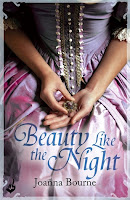

With her lyrical writing style, strong sense of historical place and continually strong central romances, it's hard to imagine Bourne releasing a book that isn't an instant favourite. In my opinion, the Spymasters series is unparalleled in its depictions of self-sufficient, strong heroines and the men who respect them, and - after following Sevie since her infancy - it was wonderful to see this youngest member of the Meeks Street family come into her own and meet her match. 


7. Small Change by Roan Parrish 
(m/f contemporary romance with bi MC)


In the last few months, Romancelandia has started talking about the "Cinnamon Roll hero", a term that calls up the caring and soft hero without implying he is anything less for his lack of alpha-ness. The hero of Small Change, Christopher, is - in my opinion - a total CinRo hero. He owns a sandwich shop, through which he meets Ginger, a prickly bisexual Jewish tattoo artist. Ginger and Christopher's two-steps-forward, one-step-back dynamic - in which Christopher shoulders most of the emotional labour as he attempts to sort through Ginger's relationship hang-ups - was unlike any other portrayal I'd ever read. I umm-ed and ahh-ed about including it because its nothing flashy, but in some ways it deserves its place here even more so for just being a quiet, emotional romance that so beautifully undercuts our cultural narratives about unlovable women and emotionally aloof men. 


8. The Truth of Things by Tasha L. Harrison

(m/f contemporary romance)


If I had to sum up The Truth of Things in one word, it would be 'powerful'. The central romance is between a cop struggling with the racism of his department and a photographer who finds herself the target of that racist brutality. To be honest, I can't really find too many more adjectives to describe it, because it was so many things at once. Just go read it. 


9. A Taste of Honey by Rose Lerner
(m/f historical romance)


Lerner's Lively St. Lemenston series is continually outstanding, and this novella in particular was a breath of fresh air. About a hesitant baker hero and his assertive and ambitious assistant, it's dirty, sweet and showcases the historical realities of the British working and artisan classes. 
(m/non-binary historical romance)


Like Lerner, Charles is an auto-buy author for me, and this conclusion to her 'Sins of the Cities' series didn't disappoint. As always, both the mystery plot and the romance are beautifully crafted, and anyone who says that a non-binary main character is too 'modern' or 'ideological' can bog right off. Pen was gorgeous, and Mark so bloody sweet.


(m/f, m/m & f/f historical romances)

Not being American or particularly into musicals (with the exceptions of a few classics that I grew up with), the whole Hamilton thing has mostly passed me by. But that didn't mean that I couldn't enjoy these novellas set around Hamilton and the Revolutionary War. They were all gems, but my favourite was undoubtedly Rose Lerner's story of a cross-dressing female soldier who accidently comes into her husband, who believes her dead.

(m/f historical romance)

Throughout this series, set around a fictionalised version of the Space Race, readers have seen the dire state of astronaut Mitch Dunsford and his wife Maggie's marriage. This poignant novella is their second chance romance, and watching them try to untangle their misunderstandings and communication break-downs and work out where to go from here is both heart-breaking and heartening, if that makes any sense. 


(m/f contemporary romance)


Wrong To Need You was another popular favourite this year, and it's not hard to see why. Angsty forbiddden romance, long-time love...this hit all my buttons. 


14. Dance with Me by Alexis Daria
(m/f contemporary romance)


Alexis Daria's 2017 debut Take the Lead and the follow-up, Dance With Me, were strong contenders for the Best of list. In the end, I went with Dance With Me because I am a total sucker for Russian-speaking heroes and prickly heroines, not to mention women who are going to do this damn thing all by themselves, thank you very much. 


(m/f/m erotica)

The Boys Next Door is probably my favourite erotica of all time. Eminently relatable characters, a solid plot, plus an off-the-scales heat rating. 

Wednesday, 15 November 2017

Review: Sugar Pie Guy by Tabitha True

3 stars


For ages, I've been going between 3 and 3.5 stars on Sugar Pie GuyIt gets full marks for the concept and some aspects of the execution, while other - particularly the insta-love and some of the writing - didn't work so well for me. 

It's set in 1977 suburban Cleveland, where a small, run-down strip mall serves as the centre of the local community. Roberta "Bobbie" Bell's aunt owns a business there, and Bobbie and her friends decide to hold some discos for some good, clean fun, and to help Bobbie's aunt out of some financial difficulties. But when Randy is sent to Cleveland to realise his father's ambitions of turning the mall into something more profitable, the community must rally. Even though Bobbie and Randy are on opposite sides of this fight, they're drawn to each other, and soon Randy's not sure if selling the mall is the best idea after all. 

The romance between Bobbie and Randy developed quite fast, and I found it hard to accept that they could fall in love so quickly, especially given that they are on opposite sides of the campaign to save the mall, and would be entering into a potentially fraught interracial romance (as you can see on the cover, Bobbie is African-American, while Randy is white, of Italian extraction).  

Admittedly, the latter does give Bobbie pause, and constitutes part of the continued awareness of race throughout the book. I thought this was handled sensitively, reflecting both the progress made in the decade since the Civil Rights Movement ended, and the entrenched bigotry that remained. 

The American disco scene is not exactly my area of expertise, but my understanding is that it - like many cultural phenomena - arose from the marginalised African-American, gay and Latino communities, and I was pleased to see that reflected in Sugar Pie Guy. It is together with her cousin Luke, and his DJ partner, Sal, that Bobbie starts the disco, which is always intended to be a safe space for everyone: 
“Vel [the owner of the space where the disco is being held] knows that this is probably going to be a mixed straight and gay crowd, right?”    
“Right.  He doesn’t care. He says he saw everything there is to see during the war.”  Propping her chin on her hand, she warned Luke about the house rules for a private party at the Donuteria.  “No booze, no drugs, no nudity, no public sex…”  (14%)
The distinction between their "safe, suburban disco" (23%) and other, wilder ones is something that I found particularly interesting because of similar cultural phenomena in Australia and New Zealand, from the Blue Light Discos that my parents attended and that are still a fixture for young people in some communities, to the locally renowned "Lav" dances I went to in Sydney as a young teen. 

The 70s setting was expressed in campy dialogue and writing that - to me, as a modern reader - mostly hit a good level of 'cheesily fun'. Sometimes, however, I found myself rolling my eyes, particularly at the flowery, heavily euphemistic way the sex scenes are written. Bobbie and Randy's repeated use of the endearment 'baby' also got old, but I think has to do with my distaste for that particular pet name than anything else.

But, overall, I enjoyed the way Sugar Pie Guy brought both the carefree attitudes and more serious aspects of the 70s to life. It was a novel read, and I'd recommend it for anyone who - like me - is always looking for 'outside-the-box' historicals. I think there's a lot of untapped potential for romances set in the second half of the 20th Century in a variety of setting, and I hope to see more authors taking advantage of this in the future. 

Friday, 27 October 2017

Review: Starling by Virginia Taylor

2 stars


This is a case where my reading experience and thoughts about the book differ greatly. I read Starling obsessively over the course of a single night, caught up in the crazy-sauce plot and the plucky heroine fighting for a better future. However, even as I did so, I was aware that the whole thing was steeped in toxic masculinity and the Madonna/whore complex. If Starling had been the old-school romance it so much resembles, I probably could have given it a bit of leeway, but it's not and my rating had to reflect the fact that this is a book - published in the Year of Our Lord 2015 - with some serious unchallenged on-page misogyny. 

So, the crazysauce plot is this: Starling Smith is fired from her new job at Seymour's Emporium because her male supervisor - who doesn't believe he needs female employees - tells the owner, Alisdair Seymour, that she is "annoying the customers". However Alisdair offers her another position: posing as his wife. He's had word from his sister that she will be visiting, with a mystery woman in tow. Desperate to avoid her matchmaking, he offers Starling 40 pounds for two weeks of pretending to be his newly-wedded wife, only to have his plan misfire when it turns out that the mystery woman is Lavender, the childhood love who left him to marry another man. As Alisdair's new plan - to use Starling to make Lavender, his real wife-of-choice jealous - also unravels, he realises that neither woman is what he thought, and that he feels much more for Starling than he anticipated. 

The whole thing was set up so that the women were continually played off against one another: Lavender against Starling, but also Lavender against one of Alasdair's maids, because Lavender is your classic immoral, manipulative slut who has to steal everyone's man, even if that man is a gardener. In contrast, Starling is such a shining beacon of pure and good white womanhood she could have stepped right out of a Victorian morality tale. She's orphaned, inexplicably graceful and ladylike despite her rough upbringing, and martyrs herself in silence, declining to defend herself when Alasdair repeatedly lays false accusations at her feet. 

Taylor makes it explicitly clear that Alasdair means to let Starling "set the limits" of  their physical relationship and would never "take her" without her consent, and yet there were several scenes that bordered on rape-y. Since he believes Starling to be an ex-prostitute, there's a lot of "I could have her, she's a whore, she wouldn't stop me"-type thoughts, and times where Starling says 'no', but Alasdair takes a while to respond, or reflects afterwards that she didn't really mean it:
Her fist thumped his shoulder and she tightened her face. He leaned forward and trued to take her mouth, but she turned her head away. "Stop. Let me go."The uncaring beast angled his hips and teased partway into the woman he didn't give a shake of his head for, while outside in the hall, separated from him only by a door, his family and his beloved Lavender made their way to their respective bedrooms.  Starling gasped. Using a whisper of repressed rage, she said, "Any further and I'll charge you five sh...pounds." His eyes flitted over her face. She could see him consider. Efficiently, as though he'd judged the price too high, he buttoned his trousers. (loc. 2490)
Throughout the book, there are practically big, flashing neon signs that point out Alasdair is actually Mr. Rapey McRapeculture. He spends a ridiculous amount of time slut-shaming Starling - either mentally or to her face - and, sometime after the above excerpt, Starling even says to him resignedly "You don't understand the word 'No'. You never have. To you the word means later." (loc. 2831). He is such a catch, even excluding the way he intends to marry Lavender and make Starling his mistress. 

At this point, my rating might seem a bit incongruous, but I gave Starling 2 stars for two reasons. The first was that is was so well-written and engaging, I shamefully almost didn't care about any of this stuff until I thought it over after finishing the book. Secondly, I really enjoyed the historical Australian setting, and historical romances set in Australia are unfortunately few and far between. Despite my overwhelming hatred for him, Alasdair's connection to the Ballarat goldfields has stuck with me, and sparked a desire to read a romance set against the multicultural backdrop of the 1850s and 60s Victorian or New South Wales goldfields. If anyone knows of one, please let me know - I can only think of MG/YA novels: some of Kirsty Murray's Children of the Wind books and A Banner Bold in the My Australian Story series from my childhood, and the newer The Night they Stormed Eureka by Jackie French, and of Zana Bell's gold rush romance Fool's Gold, which I really enjoyed, but which is set on the South Island of New Zealand

Wednesday, 11 October 2017

Three on a Theme: Romance Novels for Outlander Fans

For some completely incomprehensible reason, Season 3 of Outlander is currently on a 2-week hiatus, so I thought I'd post a few Outlander-esque romance novels to get us all through this mini-drought. 

You can also use these as alternatives to actually reading the Outlander books, if you love the TV show but also don't want to directly give Diana Gabaldon your time and money, given the way she bites the romance-reading hand that feeds her

All three of the recommendations here are rich in history, setting, characterisation and plot. Two are set - or partially set - in Scotland, while the last incorporates the time-travel element but has an enticingly different setting. 


In terms of content, Midnight Honor is by far the closest to Jamie-era Outlander, as it features the Forty-Five Jacobite Rebellion (including Culloden, just in case your heart hasn't been ripped out enough already!). It's a poignant romance based on the true story of Lady Anne Moy, and her husband Angus, chief of Clan Chattan: he fought for the British, and she for the Jacobites. I suppose because it's set in the same difficult time, it has that same sense of hard-won and potentially transitory HFN/HEA as Outlander (although there is a definite HEA here, don't worry), as do the other two books in the same series, The Pride of Lions and The Blood of Roses


2. Highland Rebel by Judith James
Highland Rebel is set during the Glorious Revolution when the Stuart King James II was deposed in favour of his Protestant daughter Mary and her husband William. While campaigning in Scotland, English spy Jamie Sinclair marries Highland lass Catherine Drummond to keep her safe. As the Revolution unfolds, Jamie and Cat must navigate shifting political and religious alliances, as well as the finer points of their marriage. Jamie can be a bit of an alpha-hole at times, but it has the same saga-like feeling as Outlander, as well as the Scottish and Stuart elements. 


3. Beautiful Wreck by Larissa Brown
Since the previous two have adhered pretty closely to Outlander's Scottish setting, Beautiful Wreck is a bit of an outlier. But it has time-travel and a very Gothic, slow-burn vibe that I find very reminiscent of the first season of the TV show. It's set between the 22nd century, and 10th century Iceland, with the heroine being thrown back in time as she tests a machine that simulates the past. Brown conveys the harsh life and inhospitable environment faced by the early Icelandic settlers extremely well, as well as the sense of adapting to a new life. 

If anyone else has some more suggestions for Outlander-esque romances, hit me up! I'd love to hear from you. 

Monday, 25 September 2017

Review: Yuletide Truce by Sandra Schwab

3 stars
I received an ARC of this book from the A Novel Take PR (on behalf of the author) in exchange for an honest review. My opinion is my own.


Yuletide Truce was a short and sweet m/m Christmas novella. As always, Schwab builds an excellent sense of time and place, but I wish that the romance had been a little bit more drawn out.

Bookseller Alan "Aigee" Garmond loves the Christmas season, but Christopher Foreman's scathing comments in About Town magazine about Aigee's humble book reviews are putting a damper on his mood. Foreman's antipathy upsets Aigee, but, when an incident occurs that strips both men of their defences, it provides an opportunity for the two men to call a Christmas truce, one that has the possibility to turn into something more.

Schwab is extremely talented at breathing life into the everyday world of her characters. Here, that's the Victorian middle-classes, and there were lots of small moments that brought me unexpected enjoyment: Aigee's reminiscences of his life as an apprentice, the descriptions of illustrations from an English translation of the Brothers Grimm, and a reference to the knocker-upper. 

An awareness of class underlies the whole novella, as Aigee doesn't feel completely at home in either the bourgeoisie literary world in which he works, or the world of the rookery where he grew up. 

While this sense of being caught between two worlds was poignant, I felt as though it was undermined by the lack of conflict in the men's developing romance. Despite the enemies-to-lovers trope, after the men's initial on-page meeting, there was very little tension between the characters, or resistance to a relationship. It all came a bit too easy, with almost no groveling on Foreman's part, or grudge-holding on Aigee's. 

That said, the lack of angst means that it fills a certain niche within the genre: everyone needs an easy, feel-good romance at times - particularly at Christmas, when many people are dealing with conflict-heavy or fraught family situations - and Yuletide Truce fills that need perfectly. 

Wednesday, 26 April 2017

Review: Peter Darling by Austin Chant

4.5 stars


Peter Darling is a beautiful queer fairy tale that is both whimsical and poignantly real. It revolves around Peter Pan returning to Neverland as an adult, taking refuge from the real world where he is forced to live in the body of a young woman named Wendy Darling. Things have changed in Neverland and Captain Hook and the Lost Boys are no longer at war, but Peter resumes his old feud with Hook all the same, only to discover that his old nemesis now evokes a whole other set of feelings.

At the beginning of the book, we see Peter much as one would imagine: he's the boy that never grew up, playing his war games without thought for the cost of his vendetta. As much as I came to love Peter - and the book - I struggled a little bit with this initial third of the story because of the senseless and casual violence Peter inflicts. However, I think this has more to do with me and my sensitivity to violence than the book itself. Hook also reveals to Peter - and thus the reader - something about the nature of Neverland that made the violence much easier for me to bear, allowing me to get lost in the story in a way that I had previously been prevented from doing. Similarly, regardless of how I reacted to it personally, this initial immaturity is essential to Peter's character, and his progression to realising the consequences of his actions - while still maintaining his boyish enthusiasm - was masterful.

The energetic and impulsive Peter is balanced perfectly by Hook's ennui-stricken and world-weary facade, and the relationship between the two was everything you ever wanted from the enemies-to-lovers trope. Both characters are morally ambiguous, and the Neverland here is not the sanitised version of the Disney film, but - as I mentioned earlier - one with real dangers, real violence, and slightly sinister undertones like those in old fairy tales.

Nevertheless, Chant's Neverland is the best kind of fantasy world, the kind that frees us from the oppressive realities of our world, instead of replicating them. There, Peter isn't faced with gender dysphoria, or disapproval, judgement and condescension from his family. Neither must James remember the sorrows of his life in the 'real world' of post-WWI Britain.

This has been a short review - by my standards - but it's very hard to capture the magic of Peter Darling in words. It's rekindled my childhood love of the story, when I would open the copy of the book my great-uncle had given me just to look at the pictures, or when I watched my VHS copy of the animated movie so many times that it eventually unspooled in the video player, breaking them both. But it's added another deeper dimension to the story, and, as far as I'm concerned, Disney and J. M. Barrie can both go home, because Peter Darling is now canon Peter Pan. 

Thursday, 20 April 2017

Review: Against the Tide by Elizabeth Camden

2 stars
*SPOILER ALERT*

Against the Tide is an inspirational romance with a wonderful sense of place and a good premise, but I was disappointed by the male characters and the presentation of faith.

It takes place in 1890s Boston, where Lydia Pallas works as a translator for the Navy. Desperate to make enough money to buy her apartment outright before she is evicted, she takes on extra work translating Turkish and Albanian for Alexander Banebridge, a friend of her boss', in his attempt to crack the North American opium trade. Bane has dedicated himself to his crusade, and he won't be swayed by his attraction to Lydia, even as he puts her and her job in danger.

If my blurb doesn't sound entirely neutral, that's because it isn't. I really did try to write an blurb that uninfluenced by my opinion of Bane and the other male characters, but it was impossible, so in the end, I just went 'stuff it, I'm going to be talking about it in the next paragraph anyway' and cast some subtle shade. 

The two main male characters - Bane and his friend, Admiral Eric Fontaine, who is also Lydia's boss - both treat Lydia abominably. Bane sweet-talks and manipulates her into undertaking actions of questionable legality for his crusade against opium, trading on her desperate need for money, and when Eric discovers this, he promptly fires her, without any thought about what it will mean for her ability to provide for herself. Having got what he wants from her - translations about shipments of opium - Bane drops her like a hot rock, not even paying her the rest of the money he owes her until many months later. So Lydia is forced out of her home, and into a hand-to-mouth existence working in a bakery. Bane's actions are made worse by the fact that Lydia's upbringing in an orphanage has left her with a need for security and ordered surroundings, and she repeatedly makes him aware of how much she fears sliding back into poverty. It read like a penny dreadful, with Lydia as the poor, waifish heroine, whose fall from grace has a moral about consorting with men and being a heathen. Other elements of the plot also reinforce this Gothic vibe, such as - SPOILER ALERT - Lydia's addiction to opium, and her imprisonment in a isolated estate. 

Throughout most of the book, Bane is the one of the two who is supposedly a committed Christian, while Lydia isn't very religiously inclined (of course, the nature of inspirational romance means that Lydia does become Christian). However, in my opinion, neither Bane nor Eric comes off well as an example of Christian charity, or any positive Christian trait. Yes, Bane's desire to end the opium trade is driven by his faith, but it's mostly to absolve himself of his prior involvement in it, rather than any genuine desire to help others. I'm not very religious, but my grandmother is from the 'whatever you did for the least of my followers, you did for me' school of thought, not the 'cause an innocent woman's downfall and a lot of grief for a lot of people, but don't worry about the ramifications of your actions, because you're a self-righteous Christian man' one. But, you know, po-tay-tos, po-tah-tos . 

As though the whole ghosting-the-heroine-for-several-months wasn't enough, Bane also feels the need to constantly lecture the female characters about how they can save their souls. Other male characters also mansplain Christianity, and I came to resent the way that this was presented as a revelation from moral, Christian men (who weren't really that moral), to women, as though women are inherently immoral or need to have men interpret religion and proselytise it to them. However, while both are inherently gendered and adhere to the virgin-whore dichotomy, I did find it interesting to note the difference between the dynamic in Against the Tide and many other inspirational romances I have read, where the heroine is a pure and good Christian, and must teach the hero the error of his ways. 

But, back to my problems with Bane, he was also a bit holier-than-thou about the whole fight against the opium trade, and did this horrible 'I-told-you-so' throughout Lydia's recovery from opium addiction (when he wasn't evangelising).

At this point, you may well be wondering why I've given Against the Tide two stars, since I've just written a huge laundry list of all the things I *didn't* like (here's looking at you, Bane). But there were elements that I liked, or that worked for me. The naval and opium trade and usage aspects were interesting, well-researched and well-integrated into the story. It's always nice to see a historical romance heroine with an occupation, and I appreciated that Lydia was learned, employed and independent, although much of this is, of course, undercut in the course of the story. Similarly, she is an immigrant, she and her family having arrived from Greece when she was a child. I also admired what Camden tried to do here with having an opium-addicted heroine, even if the religious, paternalistic and moralising undertones meant that it didn't always work for me. Despite my problems with it, the story was also compelling, in that way that Gothic and old-school romances often are.

I have a strange relationship with inspirational romance, as I think many romance readers do. For me, this definitely fell into the 'too much inspie' category, and I wouldn't advise reading it unless you are a hardcore inspie-lover and are totally feeling the gender dynamic (although I'm not sure that inspie-loving gender-traditionalists frequent this small-time, rant-y, feminist blog). If you are interested in giving something of Camden's a go, I have previously read and enjoyed Toward the Sunrise and Until the Dawn, which feature all of the strong points of Against the Tide - strong, working heroine, good sense of place and interesting historical tidbits - without nearly as many pitfalls. 

Sunday, 5 March 2017

Review: Follow Me into Darkness Anthology

Multiple ratings


In Germany at this time of year, as elsewhere across the globe, people celebrate Carnival, which here is called Karneval, Fasching or Fastnacht. The day I arrived was Weiberfastnacht, and it was the first day of the big festival in Cologne. Catching the train to the town where I am now living was a funny and wonderful experience, because many people were dressed up and getting into the celebratory mood, even though it was still early in the morning. Then, yesterday, I watched my social media as my friends back home in Sydney attended our Mardi Gras parade. All of this left me feeling a bit forlorn, because I had missed out on both set of celebrations. 

But then I remembered Follow Me into Darkness, an anthology of queer romances centred around Carnival that I'd been meaning to read, and which I devoured last night and this morning. It was a really mixed bag, as anthologies often are. Here are my thoughts: 

Hurricane by Santino Hassell - 3.5 stars
Two very different men find each other and explore New Orleans in one night during Carnival. The two heroes complemented each other well, but it's told entirely from one hero's (Zay's) perspective and I would have appreciated more insight into the other character, Keegan. 

If We Be Friends by J C Lillis - 4 stars
This was the stand-out in the anthology for me. Two teenaged cast-mates on a Hamlet-inspired TV show turn over a new leaf. Poignant, touching, and so much love for the unabashed and witty use of Shakespeare. 

Masked by J. R. Gray - 1.5 stars
God, I don't even know what to say about this one. I was riding high after If We Be Friends, and this brought me back to earth with a thud. Two childhood friends whose lives have gone in very different directions meet again when one comes to the aid of the other, who is being beaten up in a homophobic attack. Attacked hero wants to get it on with other hero, despite his injuries, and then there are a lot of artificial roadblocks put the way to prevent this, including a quest to find condoms and accidental cock-blocking by the beaten-up hero's lesbian beard wife (??!). I want to say that it's very cliched, but I'm also not comfortable making that assessment. 

It's supposedly set in Brazil, but who knows where because a city is never mentioned. I guess non-Western countries are just exotically cultured monoliths, so why bother? Also, I'm not sure if I missed something, but at the beginning a date of February 2000 is given and there's no apparent time-jump, yet the heroes have Kindles and iPhones??? /end snarky rant

The Queen's Reflection by Kris Ripper - 3 stars
The Queen's Reflection takes place in a fantasy world, which I would normally be fine with but the last story had minimal Carnival vibes, and it feels weird to have an anthology where two consecutive stories have only minimal connection to the prompt in real-world terms. Anyway, fantasy world is pretty standard, in terms of being medieval-inspired, until weird futuristic things like keystrips (essentially credit cards?) pop up. Stuff like this is just dropped in and not properly explained or connected to the existing world-building that has occurred. 

The female-assigned-at-birth main character, queen of the kingdom, has gender dysphoria, and fictional-world Carnival presents her with an opportunity to shed her skin and move around in disguise. Despite the fact that I started off with what I didn't like about this story, it was emotional, and the menage and self-discovery aspects work well.

Touched by Roan Parrish - 3.5 stars
Towards the end I thought Touched was for sure going to be 4 stars, and then it ripped my heart out with a very, very qualified HFN. The narrator, Phillippe, is a bar owner in prohibitionist New Orleans. When he touches people, he glimpses their futures, but during 1929's Carnival, his visions intensifies, and signal that something big is on the horizon. At the same time, he meets African-American trumpet player Claude, who he wants like no man or woman he's had before.

Writing was a touch florid in places - really, I hate the overuse of adjectives in people's visions/dreams, it just kills me - but this had so much history and story packed in to such a little novella, and I did enjoy it immensely. Even with the soul-destroying ending.

Other thoughts
I know that in the U.S., Carnival is strongly associated with New Orleans, so I guess it makes sense that two of the five stories in this anthology would be set there. However, Carnival/Mardi Gras is something that occurs across the historical Christian - particularly Catholic - world, with many different associations. For example, in Australia, it has become completely divorced from his Lenten roots, and is solely celebrated as a LGBTQIA+ festival, while in many other places the two exist side-by-side, and in some (like Germany), it has virtually no connection to the LGBTQIA+ community. I would have liked to see both the relationship between Carnival, Christianity and queerness and Carnival as a worldwide phenomenon explored in more depth, or tackled more overtly. I also feel like questions of who Carnival is for could have been more drawn out, although Hassell's story did deal excellently with this theme in a horribly realistic fight between the heroes and some homophobic tourists.

Ultimately, I feel like the fictional world and Brazil-with-minimal-reference-to-setting-and-interaction-with-Carnival stories didn't pull their weight in terms of actually exploring Carnival. But, in the introduction, the authors talk about shedding metaphorical masks for physical ones, and how this can be freeing for LGBTQIA+ people. So perhaps the metaphoric representation of Carnival is more important than the physical representation, and as a cishet person and someone constantly stuck in academic analysis mode, I haven't been able to appreciate that as I should (The Queen's Reflection did pull it's weight in this regard. No comment on Brazil.)

NB: 

  • Potential readers should be aware that some stories feature homophobic violence. 
  • I've stuck with the 'Carnival' spelling for consistency and because it's the most internationally recognised (at least, Encyclopaedia Britiannica and Wikipedia both use this spelling), but the subtitle of the anthology actually uses 'Carnivale'. 
  • I may as well take this chance to say that I don't know how active the blog will be in the next month or so - I have uni commitments over 8 hours a day, 6-7 days a week! 

Thursday, 23 February 2017

Review: Tempting Hymn by Jennifer Hallock

4.5 stars
Release date: 24/2/16
I received an ARC of this book from the author in exchange for an honest review. My opinion is my own.


I have to admit, I was nervous about Tempting Hymn, because Hallock has set herself a mammoth task: telling the romance of a 'fallen' Filipina nurse and an American missionary workman recovering physically from illness, and mentally from the death of his wife and children, in only 152 pages. Even though I have read and loved both of Hallock's prior two works, where she tackles similar storylines in comparative depth, I'm still impressed at the way she has pulled it off. 

Like the first novel in this series, Under the Sugar Sun, which I reviewed at the beginning of last year, Tempting Hymn manages to give adequate breathing room to the harsh historical realities of American colonial rule in the Philippines, while delivering a romance that is sweet, realistic and - above all - emotional.

Readers of Under the Sugar Sun will remember Rosa, the nurse assigned to care for Georgie's erstwhile fiance, Archie Blaxton. After the events of Under a Sugar Sun, Rosa gave birth to an illegitimate half-American son, Miguel, and was ostracised both by the people she had lived alongside her whole life, and the missionary community for whom she worked as a nurse. Despite the fact that she wants nothing more to do with American men, caring for missionary Jonas Vanderberg gives her a final chance to regain her nursing position at the local hospital, and give Miguel the life he deserves. 

Having lost his wife and daughters to cholera, Jonas has nothing left to live for. The surly and insistent Rosa is only prolonging his misery, until he realises the unjust way that she has been treated. There's fight left in Jonas yet, but a perceived connection between Rosa and another American man will only hinder Rosa's attempts to get her life back on track.

The Rosa from Tempting Hymn is very different to the Rosa shown in Under the Sugar Sun. Partly, that's because she was irreparably changed by the events described there, but also because her side of the story humanises her. As a heroine, she's at once heartbreaking and eminently relatable. The way the world has treated her hasn't left her much room to be emotional, so she just gets on with what she needs to do. 

Jonas is a salt-of-the-earth kind of guy. He decided to enter the mission field to impress his wife's well-to-do family, because, while he may not be an educated man, he can build anything, and the missionary movement needs jacks-of-all-trades as much as they need fancy preacher men. While I had initial concerns that his faith wouldn't sit well with me, the religious aspect was something that I valued most about this book.

As romance readers, we most often see representations and explorations of Christian faith in inspirational romances, but I want to make clear that Tempting Hymn is not an inspie. For a start, Rosa and Jonas would never cut it as a couple in an inspirational romance, because Rosa is Catholic, and she has no interest in converting. Secondly, I think Hallock's implicit focus here is the way religion is an ambiguous force. While Jonas is a man of God from the 'love thy neighbour' school of thought, the missionaries are able to justify the wrongs of colonisation because they are saving the heathen Catholic Filipinos, just as people - both Catholic and Protestant - use religious doctrine to ostracise Rosa (but not the man who got her pregnant, because of course not!). 

In this - and in other aspects of the book - Hallock highlights the way that repressing and proscribing sexuality adversely affects both women and men. Rosa and Jonas' tentative first love scene, where they are figuring out one another and themselves, was exquisitely done. In fact, all the sex scenes here are insanely hot, just like in Under a Sugar Sun

Ultimately, just like in her other books, Hallock doesn't pull any punches in Tempting Hymn, with either the romance or the historical detail. She does her setting and her characters justice, delivering a story that is raw and unflinching, but never too dark, because it has an engaging and touching romance at its core. 

Sunday, 12 February 2017

Review: A Dream Defiant by Susanna Fraser

4 stars

In my mind, there are two types of Regency romances: those that follow in the tradition of Austen and Heyer, showing the privileged world of the Ton and the upper-middle classes, and those that lift the veil and show ordinary Britons and the socio-political context that affected their lives. Over the past eighteen months I've really come to appreciate this second type of Regency, and A Dream Defiant is no exception.

It's a wonderfully detailed interracial romance, set in Spain during the Napoleonic War. The hero, Elijah, is an black man and an non-comissioned officer in the British army. When one of his men is killed looting after a battle, he promises the dying man that he will take care of his wife, including passing on a valuable looted necklace. Elijah has admired Rose from afar for years, but her husband's death has put her in a very difficult position. She's without protection in a rough army camp, with a young son and rumours swirling that she is in possession of a valuable necklace. She needs to remarry quickly, and soldiers are lining up for the privilege. Elijah is the only one she trusts, but he's also the only one who seems to have no interest in marrying her. 

The real beauty of A Dream Defiant is the way that it showed the realities of the characters' situations. The life of women who followed the drum was difficult, as is Elijah's position as the son of runaway slaves who now has command over white men. Most of the conflict comes from the interracial nature of Elijah and Rose's romance. Elijah wants to make sure that Rose understands what being his wife would mean, and there's some racist blowback from other characters. 

Around two-thirds to three-quarters of the way through, there's a time jump, and the rest of the book is about Elijah, Rose and her son's life back in England. I had mixed feeling about this last bit. It was nice to see the couple's life together when they were settled, and to see what Elijah's life as a black man was like in his homeland, but it also just felt like a really extended epilogue with it's own mini-plot. 

Without giving too much away, I'm also not sure how I feel about the quick resolution of that mini-plot. I know that some racism is the result of ignorance, misunderstanding and fear of the Other, but I also don't feel like we can write it all off as not being malicious, especially in the current political climate. And the impact on the individual and his family is the same regardless, so in the end it doesn't really matter what prompts people to be racist. Ditto when racism is mingled with or disguised as a non-racist grudge. Perhaps I wouldn't have the same reservations if the book were longer, but because this part of the book is little more than an addendum, there's not adequate space to give the issue the space it needs and deserves. It's sad, really, because the representation elsewhere in the story was so nuanced. 

In truth, I wish that A Dream Defiant had been a full-length novel. There would have been a smoother transition from Spain to England. We could have seen Rose and Elijah getting to know each other and falling in love slowly, and it would have given the reader a smoother transition from Spain to England, with more context to the scenes of them as a married couple in England.

Despite the fact that I've spent the last two paragraphs listing my quibbles, I really did enjoy A Dream Defiant, and I thought it was done very well for a novella. The way Fraser writes about life following the drum is intense that it stuck in my mind for weeks afterward, so A Dream Defiant joins the many books that I've given 4 stars to lately. But what can you do? There are books that just beg to be reviewed, and, lately, many of those have been 4 star reads.
Related Posts Plugin for WordPress, Blogger...