Showing posts with label fantasy romance. Show all posts

Saturday, 27 January 2018

Best Reads of 2017: Part 1

It's almost the end of January, and - after a long, stressful end to the year on the academic front - I've finally got my ass into gear to publish my Best Reads. In 2016, I set this post up as my 5 best reviewed reads, 5 best un-reviewed reads and 5 best not published in 2016. Given the marked lack of reviewing in 2017 comparative with 2016, I was unable to do the same this time around. Instead, I've just chosen my best 15 books of the year.

As always, narrowing a year's reading to a handful of books is extremely difficult. I chose the featured books not just because they were outstanding, extremely enjoyable books, but also because they stuck in my mind for some reason. This may be originality or uniqueness of concept, outstanding execution and exquisite worldbuilding and/or characterisation. It is almost always a combination of all of the above, sometimes also accompanied by a sense that a book I loved hadn't been given its due when it came out, or in the end of year Round-Ups. 

So, without further ado, I present you with my 15 Best Reads of 2017. (This post was initially just the first half, but then I never got around to doing my second post, so I edited this one and collated them into one...in August).

1. The Future Chosen by Mina V. Esguerra
(m/f NA romance in fictionalised setting)


Technically, I'm cheating on this one: it was published in the last few days of 2016, but I couldn't bear to leave it off. It's the romance between two young political hopefuls in a fictional country where only one person from each 'family' is allowed to enter the public service, meaning that - in order to have a relationship - one of them would have to bow out of political life. When I reviewed it back in February, I called it "suspenseful and sweet and clever and just so good". To that, I would add, 'extremely feminist' and 'a nuanced portrayal of oligarchy and elitism'. 


2. Peter Darling by Austin Chant 
(m/m fantasy romance with trans MC)


This queer Peter Pan retelling was everything I never knew I needed. When he can no longer bear his life as Wendy Darling in the real world, Peter Pan flees back to his childhood refuge of Neverland, only to find that Captain Hook now inspires an entirely different set of feelings. The initially immature Peter and ennui-stricken Hook offset each other perfectly in a unique rendering of the enemies-to-lovers trope. Chant's Neverland is reminiscent of old Grimm fairytales, both in the trials and suffering the characters must face, and in the sense of hope and possibility offered by a world unfettered by mundane laws and boundaries. 


3. Pretty Face by Lucy Parker 
(m/f contemporary romance)


Parker's second foray into the London theatre world was just as thrilling and fulfilling as her first, the much-lauded Act Like It. I'm a sucker for characters snarking at one another to hide their attraction, and Pretty Face has that in spades, along with a heroine fighting against being pigeon-holed as a sexpot, a grumpy theatre director and an age-gap trope. 


4. Tempting Hymn by Jennifer Hallock 
(m/f historical romance)


The poignant and sweet romance between a missionary workman and a fallen Filipina nurse during American colonial rule in the Philippines, Tempting Hymn was another early-year review before I got dragged down into a vortex by university work. The heroine's story - that of being seduced, bearing an illegitimate child and trying to build a better life for herself and her child after being ostracised - is one of eternal relevance, as is Hallock's exploration of the differences between preaching the tenets of a faith, and living them. 


5. An Extraordinary Union by Alyssa Cole 
(m/f historical romance)


I'm not alone in thinking that this was one of the most outstanding contributions of 2017. The story of Elle, a freedwoman who goes undercover as a slave in the South to spy for the Union during the Civil War, has garnered a lot of praise both inside and outside Romancelandia. That's how it should be, because it's an exquisitely crafted story with so much to say about relationships, race, gender, history and society. 


6. Beauty Like The Night by Joanna Bourne 
(m/f historical romance)
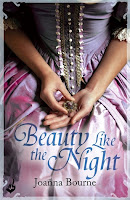

With her lyrical writing style, strong sense of historical place and continually strong central romances, it's hard to imagine Bourne releasing a book that isn't an instant favourite. In my opinion, the Spymasters series is unparalleled in its depictions of self-sufficient, strong heroines and the men who respect them, and - after following Sevie since her infancy - it was wonderful to see this youngest member of the Meeks Street family come into her own and meet her match. 


7. Small Change by Roan Parrish 
(m/f contemporary romance with bi MC)


In the last few months, Romancelandia has started talking about the "Cinnamon Roll hero", a term that calls up the caring and soft hero without implying he is anything less for his lack of alpha-ness. The hero of Small Change, Christopher, is - in my opinion - a total CinRo hero. He owns a sandwich shop, through which he meets Ginger, a prickly bisexual Jewish tattoo artist. Ginger and Christopher's two-steps-forward, one-step-back dynamic - in which Christopher shoulders most of the emotional labour as he attempts to sort through Ginger's relationship hang-ups - was unlike any other portrayal I'd ever read. I umm-ed and ahh-ed about including it because its nothing flashy, but in some ways it deserves its place here even more so for just being a quiet, emotional romance that so beautifully undercuts our cultural narratives about unlovable women and emotionally aloof men. 


8. The Truth of Things by Tasha L. Harrison

(m/f contemporary romance)


If I had to sum up The Truth of Things in one word, it would be 'powerful'. The central romance is between a cop struggling with the racism of his department and a photographer who finds herself the target of that racist brutality. To be honest, I can't really find too many more adjectives to describe it, because it was so many things at once. Just go read it. 


9. A Taste of Honey by Rose Lerner
(m/f historical romance)


Lerner's Lively St. Lemenston series is continually outstanding, and this novella in particular was a breath of fresh air. About a hesitant baker hero and his assertive and ambitious assistant, it's dirty, sweet and showcases the historical realities of the British working and artisan classes. 
(m/non-binary historical romance)


Like Lerner, Charles is an auto-buy author for me, and this conclusion to her 'Sins of the Cities' series didn't disappoint. As always, both the mystery plot and the romance are beautifully crafted, and anyone who says that a non-binary main character is too 'modern' or 'ideological' can bog right off. Pen was gorgeous, and Mark so bloody sweet.


(m/f, m/m & f/f historical romances)

Not being American or particularly into musicals (with the exceptions of a few classics that I grew up with), the whole Hamilton thing has mostly passed me by. But that didn't mean that I couldn't enjoy these novellas set around Hamilton and the Revolutionary War. They were all gems, but my favourite was undoubtedly Rose Lerner's story of a cross-dressing female soldier who accidently comes into her husband, who believes her dead.

(m/f historical romance)

Throughout this series, set around a fictionalised version of the Space Race, readers have seen the dire state of astronaut Mitch Dunsford and his wife Maggie's marriage. This poignant novella is their second chance romance, and watching them try to untangle their misunderstandings and communication break-downs and work out where to go from here is both heart-breaking and heartening, if that makes any sense. 


(m/f contemporary romance)


Wrong To Need You was another popular favourite this year, and it's not hard to see why. Angsty forbiddden romance, long-time love...this hit all my buttons. 


14. Dance with Me by Alexis Daria
(m/f contemporary romance)


Alexis Daria's 2017 debut Take the Lead and the follow-up, Dance With Me, were strong contenders for the Best of list. In the end, I went with Dance With Me because I am a total sucker for Russian-speaking heroes and prickly heroines, not to mention women who are going to do this damn thing all by themselves, thank you very much. 


(m/f/m erotica)

The Boys Next Door is probably my favourite erotica of all time. Eminently relatable characters, a solid plot, plus an off-the-scales heat rating. 

Sunday, 9 July 2017

Review: Sight Unseen Anthology

Multiple ratings


The concept of this anthology was that well-known romance authors would each write a story outside of their usual genre, but their name would not be attached to it until some time after publication, leaving the reader to guess which author wrote which story. I thought the concept was clever and was executed well - although I am pretty sure I know the author of one story, I can only make guesses at the rest. 

Even though I auto-buy three of the five authors included in this anthology (Thomas, Barry and Satie), and regularly also read and enjoy Duran's books, I found the majority of stories (3/5) just okay. I've been thinking about this: on one hand, it's very common for anthologies to be a bit of a mixed bag, while, on the other, I think the experimental nature of the anthology could also be a contributing factor. Not having the authors name attached to their work means there's a lack of confirmation bias, because the reader can't go in thinking: 'I've loved all of this author's previous work, surely I will love this as well' and is thus more critical than they might otherwise be.

Nonetheless, I think that Sight Unseen is full of quick, interesting reads, and contains something for everyone, except maybe readers who heavily lean towards historical romance. The novelty factor also adds something fun and unique to the reading experience. 

Lost that Feeling - 3 stars
Before being captured as the leader of a rebellion, Alma used her magic to wipe her memory. When her fellow rebels break her out of the prison where she has been kept, she must relearn her place in this underground movement against the King, and begins to question her motives her wiping her memory, and her relationship to Driss, the man who helped her escape. 

Objectively, the world-building in Lost that Feeling was great. I'm sure most people would have enjoyed it more than I did, but I have very been particularly interested in the kind classical fantasy setting that appears here. Given a strong romance arc - like in Grace Draven's work - I can sometimes let myself go and enjoy such settings, but there were only the slightest hints of romance between Alma and Driss. Having said that, I did like the open and hopeful ending, which reminded me of the teasing ending of a prequel novella, before the book actually dedicated to unravelling the hero and heroine's relationship.

A Clear View of You - 3 stars
Kate works as a psychic to pay off her student debts, even though she hates it and the whole thing is obviously bogus. But then North shows up, offering her an obscene amount of money if she'll use her 'skills' to help him locate an object. 

As a Fey, North knows that Kate has no psychic talent, but what she does have is a mother who is meddling with powers beyond her control. He needs Kate's help to gain entrance to the compound where her mother's so-called 'coven' live, and take back a Fey orb whose power is being misused, before it is too late.

Again, I liked the world-building and backstory of this one more than the romance. Kate has issues from growing up with a hippy mother who believes she is a witch, and just wants to lead a normal life. North is more of an enigma as a character, but the differentiation between the mundane and fey worlds were well-explained and -constructed. However, I wasn't convinced by the romance arc, and feel like the story would have benefited from being a bit longer, or having a bit more characterisation on North's part. 

Free - 3 stars
In small-town Montana, Wren's father and uncle run the local second-hand car dealership and a motorcycle club. She's sure that the club just a social thing for bored guys for like motorbikes and wearing leather jackets until the dealership's dorky part-time accountant, clues her into some suspicious stuff on the books. 

Brad has had it bad for Wren for ages, but she's the town's unofficial first daughter, not to mention the on-again/off-again relationship with one of the guys in the motorcycle club. But when he accidentally lets Wren in on what's going on behind the scenes, assuming she was already in the know, she begins to make her own investigations, and needs someone to turn to when she uncovers something unpleasant. 

Heroes in motorcycle clubs are currently all the rage, and Free used this trope in a creative way that I really appreciated. Making it MC-adjacent meant that the reader doesn't have to tackle the moral greyness or suspension of disbelief involved when the hero is actually a biker. The story was also very well written and paced. I considered giving it a higher ranking, but didn't, because Wren's portrayal of the dumb-blonde-with-smokin'-body portrayal rankled. There's nothing inherently sexist about it - in fact, it is a good example of Butler's concept of performative gender, but it was continually a point of focus in a way that centred the male gaze, and it dampened my enjoyment of the whole thing a bit. 

Chariot of Desire - 3.5 stars
The 70's were good to the legendary band Donjon, but as the 1980's roll around, the rock'n'roll lifestyle has taken its toll. Lead singer Donny has joined a Christian sect, and is thus unwilling to sing any of their backlist that contains immoral themes. So, basically, all of it. With the stress on the band reaching breaking point, Donny turns to the band's drummer, CJ, as they try to find a balance between Donny's religion and demons, CJ's standoffishness and the good of the band.

I found Chariot of Desire interesting and different, for a number of reasons. There's the mid-to-late 20th century setting (which I think is massively underused in romance), the use of religion and sectism and the fact that the main characters are past their prime and live (or lived) for sex, drugs and rock'n'roll. As with other stories in the anthology, there is an open ending without a definitive HFN or HEA, but for some reason it worked slightly better for me here, perhaps because it would have been too much of an about-face for the characters to commit to a relationship together. 

The Heart is a Universe - 5 stars
Every generation, on the planet of Pax Cara, a child is chosen and raised with the knowledge that, when they grow up, they will be a sacrifice to the old gods. With less than a month left until she must sacrifice herself, Vitalis is looking for a way out. A hero in his own right, Eleian of Terra Illustrata has watched the media coverage of Vitalis for many years. When they meet at an official function, he makes her a public offer of marriage. She accepts, but both of them are hiding things from the other, and the day of the sacrifice is growing ever closer. 

The Heart is a Universe was the anthology's stand-out story for me. The world-building, characterisation and plot were all amazing, and it several times it went in directions I genuinely did not expect. It has an unconventional HEA, and if someone else had told me about it, I would have scoffed and denied that anyone could ever pull that off, but somehow, the author does. 

Also, for those of you taking part it July's #RomBkLove on Twitter or elsewhere, yesterday's theme was "favourite Virgin Hero/Heroine", and many of us talked about our love for virgin heroes, and made some suggestions. I forgot to mention Eleian, but he is an awesome virgin hero, and I love the way this is worked into the story.

Concluding Thoughts
Looking back on what I've written, it strikes me that Sight Unseen is not just experimental in form, but is also pushing the romance boundaries in other ways, particularly in the way many of the endings do not fit genre conventions surrounding the HEA/HFN. That makes me feel bad about critiquing them, or - more accurately - critiquing some and accepting others. But I'm all about the HEA. 

Wednesday, 26 April 2017

Review: Peter Darling by Austin Chant

4.5 stars


Peter Darling is a beautiful queer fairy tale that is both whimsical and poignantly real. It revolves around Peter Pan returning to Neverland as an adult, taking refuge from the real world where he is forced to live in the body of a young woman named Wendy Darling. Things have changed in Neverland and Captain Hook and the Lost Boys are no longer at war, but Peter resumes his old feud with Hook all the same, only to discover that his old nemesis now evokes a whole other set of feelings.

At the beginning of the book, we see Peter much as one would imagine: he's the boy that never grew up, playing his war games without thought for the cost of his vendetta. As much as I came to love Peter - and the book - I struggled a little bit with this initial third of the story because of the senseless and casual violence Peter inflicts. However, I think this has more to do with me and my sensitivity to violence than the book itself. Hook also reveals to Peter - and thus the reader - something about the nature of Neverland that made the violence much easier for me to bear, allowing me to get lost in the story in a way that I had previously been prevented from doing. Similarly, regardless of how I reacted to it personally, this initial immaturity is essential to Peter's character, and his progression to realising the consequences of his actions - while still maintaining his boyish enthusiasm - was masterful.

The energetic and impulsive Peter is balanced perfectly by Hook's ennui-stricken and world-weary facade, and the relationship between the two was everything you ever wanted from the enemies-to-lovers trope. Both characters are morally ambiguous, and the Neverland here is not the sanitised version of the Disney film, but - as I mentioned earlier - one with real dangers, real violence, and slightly sinister undertones like those in old fairy tales.

Nevertheless, Chant's Neverland is the best kind of fantasy world, the kind that frees us from the oppressive realities of our world, instead of replicating them. There, Peter isn't faced with gender dysphoria, or disapproval, judgement and condescension from his family. Neither must James remember the sorrows of his life in the 'real world' of post-WWI Britain.

This has been a short review - by my standards - but it's very hard to capture the magic of Peter Darling in words. It's rekindled my childhood love of the story, when I would open the copy of the book my great-uncle had given me just to look at the pictures, or when I watched my VHS copy of the animated movie so many times that it eventually unspooled in the video player, breaking them both. But it's added another deeper dimension to the story, and, as far as I'm concerned, Disney and J. M. Barrie can both go home, because Peter Darling is now canon Peter Pan. 

Sunday, 5 March 2017

Review: Follow Me into Darkness Anthology

Multiple ratings


In Germany at this time of year, as elsewhere across the globe, people celebrate Carnival, which here is called Karneval, Fasching or Fastnacht. The day I arrived was Weiberfastnacht, and it was the first day of the big festival in Cologne. Catching the train to the town where I am now living was a funny and wonderful experience, because many people were dressed up and getting into the celebratory mood, even though it was still early in the morning. Then, yesterday, I watched my social media as my friends back home in Sydney attended our Mardi Gras parade. All of this left me feeling a bit forlorn, because I had missed out on both set of celebrations. 

But then I remembered Follow Me into Darkness, an anthology of queer romances centred around Carnival that I'd been meaning to read, and which I devoured last night and this morning. It was a really mixed bag, as anthologies often are. Here are my thoughts: 

Hurricane by Santino Hassell - 3.5 stars
Two very different men find each other and explore New Orleans in one night during Carnival. The two heroes complemented each other well, but it's told entirely from one hero's (Zay's) perspective and I would have appreciated more insight into the other character, Keegan. 

If We Be Friends by J C Lillis - 4 stars
This was the stand-out in the anthology for me. Two teenaged cast-mates on a Hamlet-inspired TV show turn over a new leaf. Poignant, touching, and so much love for the unabashed and witty use of Shakespeare. 

Masked by J. R. Gray - 1.5 stars
God, I don't even know what to say about this one. I was riding high after If We Be Friends, and this brought me back to earth with a thud. Two childhood friends whose lives have gone in very different directions meet again when one comes to the aid of the other, who is being beaten up in a homophobic attack. Attacked hero wants to get it on with other hero, despite his injuries, and then there are a lot of artificial roadblocks put the way to prevent this, including a quest to find condoms and accidental cock-blocking by the beaten-up hero's lesbian beard wife (??!). I want to say that it's very cliched, but I'm also not comfortable making that assessment. 

It's supposedly set in Brazil, but who knows where because a city is never mentioned. I guess non-Western countries are just exotically cultured monoliths, so why bother? Also, I'm not sure if I missed something, but at the beginning a date of February 2000 is given and there's no apparent time-jump, yet the heroes have Kindles and iPhones??? /end snarky rant

The Queen's Reflection by Kris Ripper - 3 stars
The Queen's Reflection takes place in a fantasy world, which I would normally be fine with but the last story had minimal Carnival vibes, and it feels weird to have an anthology where two consecutive stories have only minimal connection to the prompt in real-world terms. Anyway, fantasy world is pretty standard, in terms of being medieval-inspired, until weird futuristic things like keystrips (essentially credit cards?) pop up. Stuff like this is just dropped in and not properly explained or connected to the existing world-building that has occurred. 

The female-assigned-at-birth main character, queen of the kingdom, has gender dysphoria, and fictional-world Carnival presents her with an opportunity to shed her skin and move around in disguise. Despite the fact that I started off with what I didn't like about this story, it was emotional, and the menage and self-discovery aspects work well.

Touched by Roan Parrish - 3.5 stars
Towards the end I thought Touched was for sure going to be 4 stars, and then it ripped my heart out with a very, very qualified HFN. The narrator, Phillippe, is a bar owner in prohibitionist New Orleans. When he touches people, he glimpses their futures, but during 1929's Carnival, his visions intensifies, and signal that something big is on the horizon. At the same time, he meets African-American trumpet player Claude, who he wants like no man or woman he's had before.

Writing was a touch florid in places - really, I hate the overuse of adjectives in people's visions/dreams, it just kills me - but this had so much history and story packed in to such a little novella, and I did enjoy it immensely. Even with the soul-destroying ending.

Other thoughts
I know that in the U.S., Carnival is strongly associated with New Orleans, so I guess it makes sense that two of the five stories in this anthology would be set there. However, Carnival/Mardi Gras is something that occurs across the historical Christian - particularly Catholic - world, with many different associations. For example, in Australia, it has become completely divorced from his Lenten roots, and is solely celebrated as a LGBTQIA+ festival, while in many other places the two exist side-by-side, and in some (like Germany), it has virtually no connection to the LGBTQIA+ community. I would have liked to see both the relationship between Carnival, Christianity and queerness and Carnival as a worldwide phenomenon explored in more depth, or tackled more overtly. I also feel like questions of who Carnival is for could have been more drawn out, although Hassell's story did deal excellently with this theme in a horribly realistic fight between the heroes and some homophobic tourists.

Ultimately, I feel like the fictional world and Brazil-with-minimal-reference-to-setting-and-interaction-with-Carnival stories didn't pull their weight in terms of actually exploring Carnival. But, in the introduction, the authors talk about shedding metaphorical masks for physical ones, and how this can be freeing for LGBTQIA+ people. So perhaps the metaphoric representation of Carnival is more important than the physical representation, and as a cishet person and someone constantly stuck in academic analysis mode, I haven't been able to appreciate that as I should (The Queen's Reflection did pull it's weight in this regard. No comment on Brazil.)

NB: 

  • Potential readers should be aware that some stories feature homophobic violence. 
  • I've stuck with the 'Carnival' spelling for consistency and because it's the most internationally recognised (at least, Encyclopaedia Britiannica and Wikipedia both use this spelling), but the subtitle of the anthology actually uses 'Carnivale'. 
  • I may as well take this chance to say that I don't know how active the blog will be in the next month or so - I have uni commitments over 8 hours a day, 6-7 days a week! 

Tuesday, 17 May 2016

Review: The Terracotta Bride by Zen Cho

4.5 stars

The Terracotta Bride is a short story set in the Chinese Underworld. Siew Tsin was just a young woman when she got hit by a motor car and wound up in the tenth court of hell. There she finds a great uncle, who promptly sells her into marriage. Her husband Jungshen is a rich man, with pious descendents who burn money and goods so that he can live well in the Underworld. One day, Jungshen brings home another wife, a terracotta woman whom he names Yonghua, and she changes everything for Siew Tsin. 

This isn't a romance, though it does have some f/f romantic aspects. The writing is lyrical, Siew Tsin's characterisation was lovely and those two things make The Terracotta Bride poignant as hell (pun not intended). The worldbuilding is also amazing, and I would auto-buy any more stories Cho wrote in the same universe. It's a short story, so this is a short review, but, basically, I loved it.

Friday, 17 April 2015

Review: Ember by Bettie Sharpe

5 stars 
"I know you think you've heard this story before, but you're wrong. Some would have it that this story begins with a virtuous virgin, a young woman of honesty and integrity sucker punched by cruel fortune and forced to sleep among the cinders while her moral inferiors lived the which was meant to be hers. Bullshit. This is no fairytale." 
That's the first paragraph of Ember by Bettie Sharpe, and it's certainly not the last time the heroine, Ember, breaks the fourth wall to warn the reader not to glorify her. For all it has the same first-person narration and fantastic setting as the fairytale retellings of my childhood, it's no starry-eyed Ella Enchanted. In fact, it's completely different from anything I've ever read before.

The main character, Ember, is a witch. Not a sanitised bubbles-and-rainbows type of witch (I'm looking at you, Glinda the Good), but a legitimate witch, the kind that makes blood sacrifices and gets her revenge on those who've wronged her.  Her love interest is equally unconventional. At birth, Prince Adrian Juste was blessed with the universal regard of his subjects; men respect him, women want him, and neither can deny him anything. As much as he craves a life where he's not surrounded by sycophants, he's not above using his curse to get what he wants. And he wants Ember, the one woman who isn't affected by his unnatural charm.  

Ember is unburdened by conventional morality, and it makes her an unpredictable and memorable character. As a snarky anti-heroine, she's eminently relatable. Sharpe treads the tightrope between amorality and likability well, keeping the reader onside through Ember's loyalty to her step-mother and -sisters. In this adaptation, Ember's step-family are whores, forced to escape their homeland and make a new life with Ember and her father.  Once again, Sharpe deals with this sensitively, and provides the reader with a raft of great secondary characters at the same time.  One of the things I really loved about this novel was that all of its characters were well-developed, independent of gendered stereotypes. There was no cookie-cutter hero, or same-same good-girl heroine; each and every character was unique and interesting. This in-depth characterisation was countered by a realtively simple plot, but this too was well-executed. 

Potenital readers should be aware that there are a few more swearwords thrown around than usual. I didn't feel like they were gratuitous - Ember's character wouldn't have been half as bad-ass without them, that's for sure - but we each have differing levels of tolerance for these things. Ditto the level of sexuality. While Ember doesn't have any more sex scenes than your average romance novel, Ember and those around her are all overtly sexual beings. Frankly, it would have been weird if this hadn't been the case, given her stepfamily's profession and the Prince's curse!

If I had to critique one thing about Ember, it would be that it was sometimes scarce on details. This occasionally drew me out of the narrative, as I'd have to flick back a page or two to remember where a particular conversation was taking place or some other such thing that had been mentioned, but not reinforced through detailed description. However, I don't feel like this came at the expense of the characterisation or plot, and it didn't really detract from my enjoyment of the book.

Ember was a great read and, at the moment, it's $0.79 on kindle. THAT'S SEVENTY-NINE CENTS, GUYS. You can't even buy a Ghost Drop for 79 cents these days. And unlike many cheap reads on Kindle, there's not a spelling or formatting mistake in sight, in addition to a good plot and excellent characterisation. It's the mythical needle in a haystack, the hen's tooth, the black cat in the coal cellar. I'm getting overly poetic now so I'll stop, but if it sounds like your thing, go get it!
Related Posts Plugin for WordPress, Blogger...